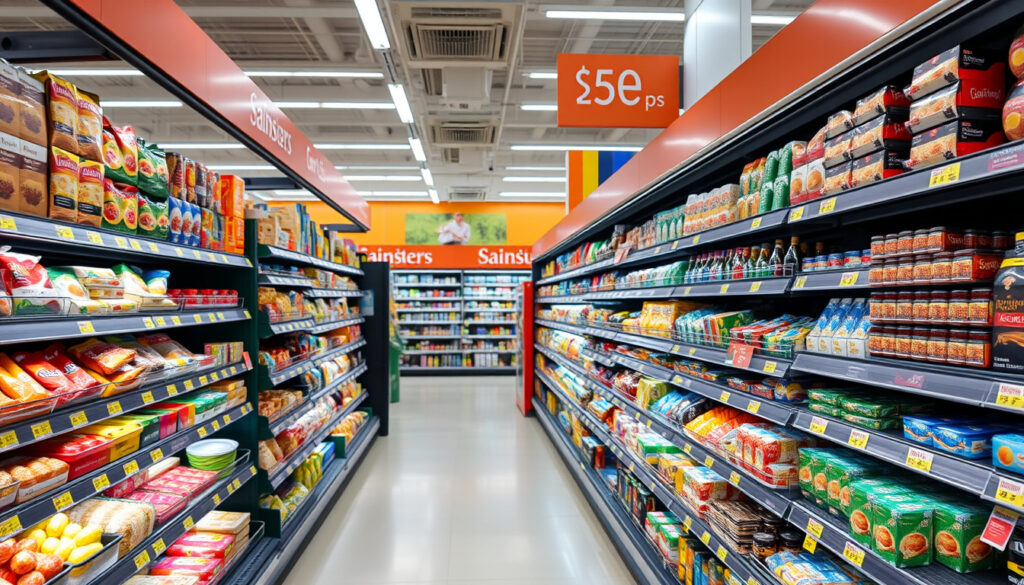
Sainsbury’s Electronic Shelf Labels – UK Trial Details and Benefits
Sainsbury’s has begun trialing electronic shelf labels (ESLs) in select UK stores, allowing head office teams to update prices remotely without staff manually changing each tag. The supermarket confirmed the pilot scheme involves three locations, with the Witney, Oxfordshire branch explicitly identified as one test site. The move places Sainsbury’s alongside a growing number of UK retailers experimenting with digital pricing technology.
Electronic shelf labels replace traditional paper price tags with battery-powered e-paper or LCD displays mounted on shelf edges. Updates transmit wirelessly from a central system, enabling price changes to appear across all tagged products within seconds. The technology has gained traction across the UK grocery sector, with retailers citing efficiency gains and reduced manual labor as primary drivers.
The trial comes as competitors accelerate their own adoption. Morrisons announced plans to roll out ESLs across 497 stores beginning in early 2026, while the Co-op is targeting 1,500 stores by the end of 2024 with full completion across its 2,400-strong estate by 2026. This widespread shift raises questions about whether ESLs represent purely operational upgrades or whether they might enable more controversial pricing practices.
What is Sainsbury’s Testing with Electronic Shelf Edge Labels?
The ESL trial at Sainsbury’s focuses on shelf hardware and the operational benefits of eliminating manual price updates. Staff no longer need to print, sort, and apply paper stickers when prices change due to promotions, stock level adjustments, or expiry-driven markdowns. Head office teams can push updated pricing directly to store displays from a centralized platform.
According to internal documentation seen by industry observers, the system allows pricing managers to coordinate markdown schedules across multiple locations simultaneously, reducing the coordination overhead that typically accompanies promotional campaigns. This centralization represents a significant shift from the traditional model where individual store managers or checkout staff would handle price adjustments manually.
ESL Technology Snapshot
Electronic shelf labels replacing paper tags
Remote price updates from head office
Three trial stores confirmed; Witney named
Trials underway as of June 2025
Key Benefits Identified in Trials
- Elimination of manual sticker printing and price gun use
- Reduced staff time spent on price-change tasks
- Improved accuracy between shelf prices and checkout charges
- Enables precise timing of markdown reductions on perishable items
- Supports real-time stock alerts and unit pricing updates
- Potential for loyalty-linked discount integration
- Decreased paper waste from discarded price labels
Snapshot Facts
| Attribute | Details |
|---|---|
| Supplier | HL Display (confirmed for Sainsbury’s case) |
| Display Technology | E-paper or LCD tags |
| Update Method | Wireless radio frequency or infrared |
| Confirmed Trial Locations | Three stores; Witney, Oxfordshire confirmed |
| Primary Focus | Efficiency gains and hardware testing |
| Retailer Stated Intent | Price reductions via ESLs, not increases |
How Do Sainsbury’s Electronic Shelf Labels Compare to Tesco?
Both Sainsbury’s and Tesco are actively trialing ESLs in UK stores, though details remain limited for each programme. Sainsbury’s has confirmed involvement from HL Display as a supplier partner, with the Witney branch serving as a documented case study. Tesco’s testing is described as covering “some select stores,” with no specific locations disclosed in available sources.
Shared Characteristics
Neither retailer has announced a firm timeline for broader rollout. Both companies appear to be at similar stages of evaluation, prioritizing efficiency and operational integration before committing to widescale deployment. The technology platforms share common features: wireless transmission, battery-powered displays, and head-office-controlled update systems.
Distinguishing Factors
Sainsbury’s trial explicitly targets efficiency improvements such as reduced sticker printing and faster promotional updates. Tesco’s trial context remains less documented in public sources, making direct feature comparisons difficult. Sainsbury’s relationship with HL Display provides a confirmed supply chain, while Tesco has not publicly named its technology partner.
Neither retailer has confirmed plans to implement dynamic pricing tied to demand, time, or weather patterns, despite the technology’s capability for such features.
Competitive Context
The two retailers operate within a rapidly evolving market. Aldi has utilized ESLs for years, while Asda has deployed the technology in over 250 express stores. M&S and Waitrose continue with select and full installations respectively, aiming for completion by 2026. Morrisons’ announced rollout across 497 stores signals that major adoption is underway across the sector, with trade sources monitoring each new deployment closely.
What Is the Status of Electronic Shelf Edge Labels in UK Supermarkets?
Electronic shelf labels have moved from novelty to mainstream across UK grocery retail in recent years. The technology now appears in various configurations at most major chains, driven by labor cost pressures, the need for pricing accuracy, and environmental motivations to reduce paper waste.
Current Adoption Landscape
- Aldi: Operating ESLs for several years across store estate
- Asda: Deployed in over 250 express-format stores
- M&S: Select and full installations underway
- Waitrose: Rollout scheduled for completion by 2026
- Co-op: Targeting 1,500 stores by end-2024, full 2,400 by 2026
- Morrisons: Confirmed rollout across 497 stores beginning early 2026
- Sainsbury’s: Active trial in three locations
- Tesco: Testing in select stores, specifics undisclosed
Technology Mechanics
ESL tags communicate with central servers through radio frequency or infrared links, allowing head office teams to push price updates without visiting individual stores. Updates trigger only when prices change, meaning tags remain static during normal operation. The system supports a range of functions beyond simple pricing, including stock level indicators, promotional highlights, and expiry countdowns for fresh produce.
Does Sainsbury’s Electronic Shelf Labels System Include an App?
Available sources do not confirm a dedicated customer-facing application tied to Sainsbury’s ESL system. The current trial appears focused on in-store operations rather than consumer interaction. Head office teams manage price updates through internal platforms, while store staff interact with hardware through management systems.
HL Display supplies shelf-edge solutions including ESL hardware, but documented specifications do not include app details for Sainsbury’s or Tesco customers. Broader ESL ecosystem players like Vusion (Sesimagotag) offer central control platforms for instant updates across store networks, though direct links to Sainsbury’s systems remain unconfirmed.
Loyalty Integration Potential
Some retailers have explored using ESLs to display personalized loyalty pricing, where discount amounts appear only on tags when customers are logged into associated accounts. No public announcements confirm Sainsbury’s plans for such features, and the current trial phase appears to concentrate on standard pricing operations.
Timeline: Sainsbury’s Electronic Shelf Labels Rollout
Public records do not document Sainsbury’s involvement with ESLs prior to the current confirmed trial. The timeline below reflects available information from industry and trade sources.
- Years prior to 2025: Aldi adopts ESLs across UK stores, establishing early precedent among major supermarkets
- 2024: Co-op announces rollout targets; Asda expands ESL deployment to express-format stores
- June 2025: Sainsbury’s confirms active trial in three stores, including Witney, Oxfordshire location
- June 2025: Tesco confirms parallel testing in select stores, no specific locations disclosed
- Early 2026: Morrisons scheduled to begin rollout across 497 stores
- 2026: Co-op targets full 2,400-store completion; Waitrose targeted for rollout completion
What Is Confirmed and What Remains Unclear
Transparency around ESL trials varies considerably across UK retailers. Some have made formal announcements, while others acknowledge testing without providing specifics.
| Established Information | Information That Remains Unclear |
|---|---|
| Sainsbury’s ESL trial confirmed in three stores | Specific locations beyond Witney, Oxfordshire |
| Witney store explicitly named as trial site | Full rollout timeline for Sainsbury’s |
| Tesco actively trialing ESLs in select stores | Technology partners for Tesco |
| HL Display identified as Sainsbury’s supplier | Whether Sainsbury’s ESLs support customer-facing apps |
| ESLs enable remote price updates from head office | Scope of price changes currently enabled in trials |
| UK-wide adoption accelerating among major supermarkets | Whether past trials existed in 2022 |
Understanding Electronic Shelf Labels in UK Retail
The emergence of ESLs reflects broader pressures facing UK supermarkets: rising labor costs, competitive price wars, and the need to reduce food waste from unsold perishable items. By enabling head office teams to update prices centrally, retailers can coordinate promotional campaigns across hundreds of stores simultaneously and adjust markdowns with precision timing.
Consumer advocates have flagged potential concerns that the same technology enabling efficient price reductions could theoretically support demand-based pricing increases. The Bank of England has warned that similar retail technologies could facilitate surge pricing patterns familiar from transport apps like Uber. However, major UK retailers have publicly stated their intent to use ESLs for reductions and cost savings rather than price increases.
The technology’s environmental credentials also feature in retailer communications. Traditional paper price changes generate waste each time a tag is replaced. ESLs eliminate this cycle, though the battery-powered displays introduce their own end-of-life considerations for device disposal and recycling programmes.
Sources and Industry Perspective
Reporting on Sainsbury’s ESL trial has drawn from multiple industry and trade sources, with The Grocer providing confirmed details including store counts and supplier relationships. Supply Chain Digital and Food Digital have covered the broader implications for retail pricing, while daily outlets including the Mirror have highlighted consumer-facing concerns about potential price changes.
Retailers claim the labels are being used for reductions, not increases, though the technology theoretically enables dynamic pricing tied to demand, time, or weather patterns.
— Supply Chain Digital reporting on ESL concerns
The supplier perspective comes primarily from HL Display, which documents its relationship with Sainsbury’s through customer case materials. Broader ESL ecosystem coverage references systems from providers including Vusion and Sesimagotag, though direct connections to Sainsbury’s or Tesco remain unconfirmed in public sources.
Summary: What Sainsbury’s Electronic Shelf Labels Mean for Shoppers
Sainsbury’s entry into ESL testing places the retailer alongside competitors accelerating adoption across the UK supermarket sector. The technology promises operational efficiencies—less manual labor on price changes, improved accuracy between shelf and checkout, and better timing for markdown reductions on perishable goods. Consumers may notice faster promotional updates and more consistent pricing as trials develop.
Whether these benefits translate into lower prices remains to be seen. Retailers have publicly committed to using the technology for reductions rather than increases, though scepticism persists given the capability for demand-based pricing. Current trials focus on hardware evaluation and operational integration, with broader rollout decisions expected as evidence accumulates from existing and planned deployments across the sector.
For now, shoppers at Sainsbury’s three trial locations may notice electronic displays where paper price tags previously sat. The experience of seeing real-time price updates—whether for promotions, markdowns, or other adjustments—will serve as early indicators of how the technology might reshape the in-store shopping experience as adoption spreads.
Frequently Asked Questions
Sainsbury’s electronic shelf labels 2022
Available sources do not document Sainsbury’s involvement with electronic shelf labels in 2022. The first confirmed public reference to Sainsbury’s ESL trials appears in June 2025 reporting.
Sainsbury’s electronic shelf labels Reddit
No Reddit threads or community discussions appeared in sources reviewed for this article. Public discussion of Sainsbury’s ESL trial remains limited to trade and news media coverage.
How do electronic shelf labels work?
ESLs are battery-powered e-paper or LCD displays mounted on shelf edges. They receive price updates wirelessly through radio frequency or infrared signals from a central system controlled by head office teams.
Will ESLs lead to higher prices?
Major UK retailers, including Sainsbury’s, have stated that ESLs enable price reductions rather than increases. The Bank of England has warned that the technology could support dynamic pricing, but no retailer has confirmed plans to implement such systems.
Which UK supermarkets use electronic shelf labels?
Aldi has used ESLs for years. Asda operates them in over 250 express stores. M&S and Waitrose continue installations, with Waitrose targeting 2026 completion. Co-op aims for 1,500 stores by end-2024 and all 2,400 by 2026. Morrisons plans 497 stores beginning early 2026.
Can I use a customer app with Sainsbury’s ESLs?
Available sources do not confirm a customer-facing application linked to Sainsbury’s ESL system. Current trials appear focused on in-store operations managed by staff and head office teams.
Where are Sainsbury’s ESL trial stores located?
Sainsbury’s has confirmed a trial in three stores, with the Witney, Oxfordshire branch explicitly identified. The remaining two trial locations have not been publicly named.
More related posts
 Sheffield Wednesday vs Leeds United – 2025 Carabao Cup Upset
 High-Fiber Foods Chart for Constipation – Free PDF Guide
 Jamal Musiala – Biography, Contract, Career and Key Facts
 Aubrey Plaza – Biography, Career, Net Worth and Husband 2025
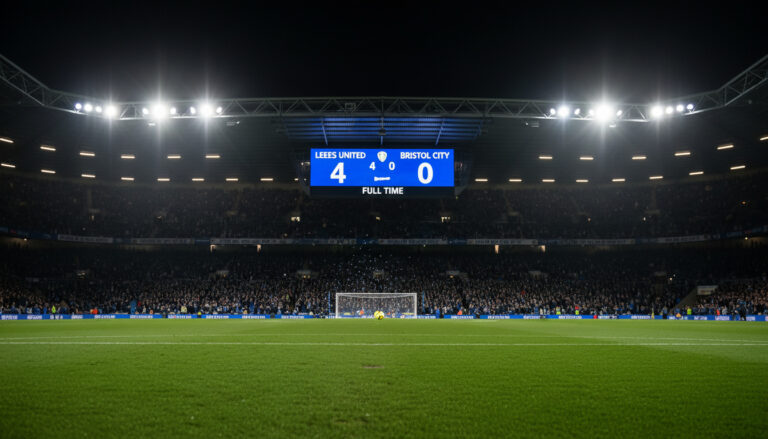 Leeds United vs Bristol City – 4-0 Result and Key Stats
 Temporary Car Insurance UK – Short-Term Cover Guide
 M and S Jeans – 2025 Guide to Styles, Fits and Sales
 Victor Hugo – Biography, Books, and Lasting Legacy