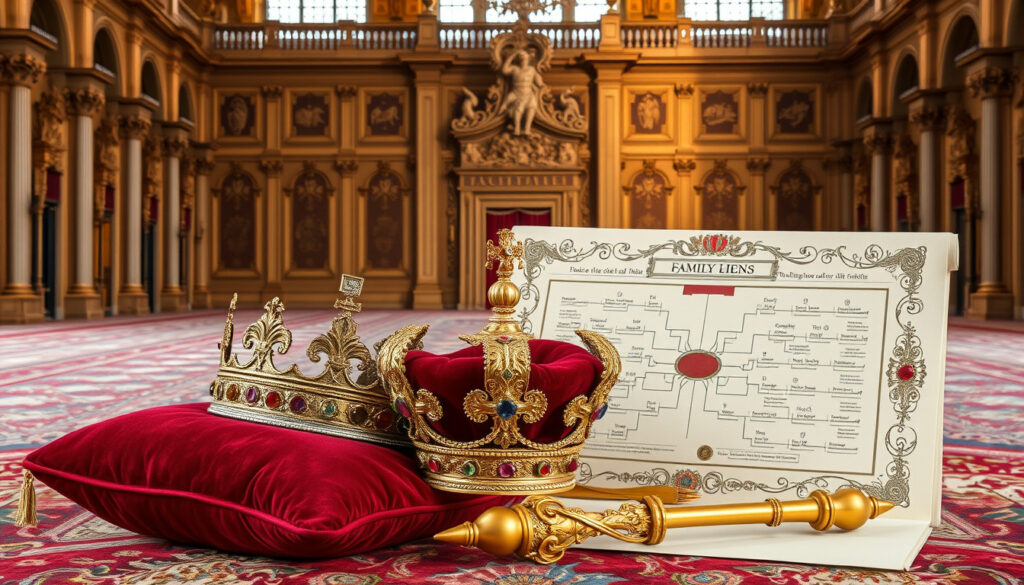
English Royal Family – Complete Guide to History, Members and Tree
The English royal family, more formally known as the British royal family, represents a lineage that has shaped the nation for over a millennium. From the early Anglo-Saxon kings to the modern constitutional monarchy under King Charles III, the story of the crown is one of conquest, dynastic struggle, and gradual evolution. This guide provides a fact-based overview of the monarchy’s history, its current members, the royal surname, the family tree, and the sequence of royal houses.
The monarchy’s roots stretch back to the 9th century, with the first widely recognized English king, Egbert of Wessex, who reigned from 827. Since then, 63 monarchs have ruled England and later Britain, a span of roughly 1,200 years. The current reigning house is the House of Windsor, a name adopted in 1917.
King Charles III ascended the throne on 8 September 2022, following the death of his mother, Queen Elizabeth II, who reigned for 70 years. The monarchy today operates as a constitutional institution, with the sovereign serving as head of state while political authority rests with Parliament.
What is the History of the English Royal Family?
The English monarchy began to take shape in the 9th century with the kingdom of Wessex. The first king widely recognized as ruling all England was Egbert, who reigned from 827 to 839. From those early days, the crown passed through a series of dynasties, each leaving its mark on the nation’s history.
The monarchy has evolved through several distinct phases. Key insights into its development include:
- The English royal family traces its roots to the Anglo-Saxon kings of the 9th century.
- The current reigning house is the House of Windsor, renamed from Saxe-Coburg and Gotha in 1917.
- The royal family’s official surname, Mountbatten-Windsor, was adopted in 1960 to combine the Queen’s and Prince Philip’s lineages.
- There have been 63 monarchs (including disputed and co-rulers) across approximately 1,200 years.
- Major royal houses include Norman, Plantagenet, Tudor, Stuart, Hanover, and Windsor.
- The line of succession is determined by male-preference primogeniture (now absolute primogeniture for those born after 2011).
- King Charles III is the current monarch; his heir is Prince William, Prince of Wales.
| Fact | Detail |
|---|---|
| Current Monarch | King Charles III (born 1948, ascended 2022) |
| Queen Consort | Queen Camilla (married 2005) |
| Heir Apparent | Prince William, Prince of Wales (born 1982) |
| Previous Monarch | Queen Elizabeth II (1952–2022) |
| Royal Household Name | House of Windsor |
| Official Residence | Buckingham Palace, London |
Who Are the Current Members of the British Royal Family?
The current British royal family is centered on King Charles III, who became monarch upon the death of his mother, Queen Elizabeth II, on 8 September 2022. His wife, Queen Camilla, serves as Queen Consort. The heir apparent is Prince William, Prince of Wales, the King’s eldest son.
Prince William and his wife, Catherine, Princess of Wales, have three children: Prince George, Princess Charlotte, and Prince Louis. The King’s other son, Prince Harry, Duke of Sussex, lives in California with his wife, Meghan, Duchess of Sussex, and their two children, Prince Archie and Princess Lilibet.
Other senior members include the King’s siblings: Princess Anne, the Princess Royal; Prince Andrew, Duke of York; and Prince Edward, Duke of Edinburgh. The family also includes numerous cousins, including the children of Princess Margaret and the Duke of Gloucester.
The first five in line to the throne are: 1) Prince William, Prince of Wales; 2) Prince George of Wales; 3) Princess Charlotte of Wales; 4) Prince Louis of Wales; 5) Prince Harry, Duke of Sussex. The 2013 Succession to the Crown Act ended male preference, meaning younger sisters no longer lose their place to younger brothers.
What is the English Royal Family’s Last Name?
The official surname of the British royal family is Mountbatten-Windsor. This name was established by an Order in Council in 1960, issued by Queen Elizabeth II. It combines the Queen’s dynastic name, Windsor, with the surname of her husband, Prince Philip, whose family name was Mountbatten.
Before 1917, the royal family had no official surname. They were known by the name of their house, which was Saxe-Coburg and Gotha, a German name inherited from Prince Albert, Queen Victoria’s husband. During World War I, anti-German sentiment led King George V to change the family name. On 17 July 1917, he adopted the name Windsor, taken from the castle that has been a royal residence for centuries.
The surname Mountbatten-Windsor is not used by all family members in daily life. Senior royals often use territorial titles instead, such as “Prince William of Wales.” The surname appears on official documents like marriage certificates. For example, Prince Harry used “Mountbatten-Windsor” on his marriage certificate in 2018.
How Does the British Royal Family Tree Look?
The British royal family tree is a complex web of descendants spanning several generations. At its root is Queen Elizabeth II and Prince Philip, who had four children: King Charles III, Princess Anne, Prince Andrew, and Prince Edward. Each of these children has their own children and grandchildren.
Children of King Charles III
King Charles III has two sons: Prince William, Prince of Wales (born 1982), and Prince Harry, Duke of Sussex (born 1984). Prince William is the heir apparent. Prince Harry is fifth in line to the throne.
Grandchildren of Queen Elizabeth II
Queen Elizabeth II had eight grandchildren: Prince William, Prince Harry, Peter Phillips, Zara Tindall, Princess Beatrice, Princess Eugenie, Lady Louise Windsor, and James, Earl of Wessex. The Queen also had 12 great-grandchildren as of 2025.
How Are Prince Harry and Prince William Related to the King?
Both are sons of King Charles III and his first wife, Diana, Princess of Wales. Prince William is the elder son and first in line to the throne. Prince Harry is the younger son and fifth in line.
What Are the English Royal Houses in Order?
The English monarchy has passed through several major royal houses, each representing a distinct dynasty. These houses reflect changes in ruling families due to conquest, marriage, and inheritance. The major houses, in chronological order, are as follows.
House of Wessex (c. 871–1066)
The House of Wessex was the ruling dynasty of the Anglo-Saxon kingdom of Wessex. Its most famous king is Alfred the Great (871–899), who unified Anglo-Saxon resistance against Viking invasions. Other notable monarchs include Edward the Elder and Athelstan, who extended the kingdom’s boundaries after the Battle of Brunanburh in 937.
House of Normandy (1066–1154)
William the Conqueror, Duke of Normandy, defeated Harold II at the Battle of Hastings on 14 October 1066, establishing Norman rule. This house included William II and Henry I.
House of Plantagenet (1154–1485)
The Plantagenets were one of the longest-reigning dynasties. Key monarchs include Henry II, Richard the Lionheart, and Edward III, who reigned for 50 years. The period also saw the reign of Richard II, who was deposed for his extravagance and injustice.
House of Lancaster and York (1399–1485)
These two branches of the Plantagenet family fought the Wars of the Roses for control of the throne. The Lancastrian kings included Henry IV, Henry V, and Henry VI. The Yorkist kings included Edward IV, Edward V (who reigned only two months, the shortest in English history), and Richard III, who fell at the Battle of Bosworth Field in 1485.
House of Tudor (1485–1603)
Henry VII founded the Tudor dynasty after defeating Richard III. He married Elizabeth of York, uniting the houses of Lancaster and York. His son, Henry VIII, is famous for his six marriages and the break from the Catholic Church. The dynasty ended with Elizabeth I, who reigned during a golden age but left no heirs.
House of Stuart (1603–1714)
James I, already king of Scotland, became the first Stuart king of England in 1603, uniting the crowns. The dynasty was interrupted by the English Civil War and the execution of Charles I. Queen Anne, who reigned from 1707, became the first monarch of Great Britain after the Acts of Union.
House of Hanover (1714–1901)
The Hanoverian dynasty began with George I, who was born in Hanover and spoke little English. The longest-reigning Hanoverian monarch was Queen Victoria, who reigned from 1837 to 1901. Her marriage to Prince Albert of Saxe-Coburg and Gotha brought a new German name into the royal lineage.
House of Saxe-Coburg and Gotha (1901–1917)
This short-lived house was named after Prince Albert’s family. It included Edward VII and George V. In 1917, during World War I, King George V changed the name to Windsor to distance the monarchy from its German associations.
House of Windsor (1917–Present)
The House of Windsor has reigned for over a century. It includes George V, Edward VIII (who abdicated), George VI, Elizabeth II, and the current monarch, Charles III. The house has adapted to changing times, including the transition to a constitutional monarchy and the modernization of the royal family’s public role.
Timeline of English Royal Houses and Monarchs
The following timeline summarizes the major royal houses and some of their most notable monarchs. This list simplifies overlapping periods and disputed claims; the full list of monarchs includes over 60 individuals.
- Anglo-Saxon (c. 827–1066): Alfred the Great, Edward the Confessor
- Norman (1066–1154): William the Conqueror, Henry I
- Plantagenet (1154–1485): Henry II, Richard the Lionheart, Edward III, Henry V
- Tudor (1485–1603): Henry VII, Henry VIII, Elizabeth I
- Stuart (1603–1714): James I, Charles I, Queen Anne
- Hanover (1714–1901): George I, Victoria
- Saxe-Coburg and Gotha (1901–1917): Edward VII, George V
- Windsor (1917–present): George V, Elizabeth II, Charles III
Clarifying Certainty vs. Uncertainty in the English Royal Family
While much about the English royal family is well-documented, some areas are less certain or commonly misunderstood. The table below separates established facts from points that remain unclear or are frequently confused.
| Established Information | Information That Remains Unclear |
|---|---|
| The current monarch is King Charles III (confirmed by official proclamation and public record). | The exact number of English monarchs varies by source due to overlapping reigns, disputes, and co-rulership (commonly cited as 63). |
| The royal family surname is Mountbatten-Windsor (legal adoption via Order in Council, 1960). | Early Anglo-Saxon kingship is less documented; dates and successions are sometimes speculative. |
| The chronology of English monarchs from William the Conqueror onward is well-documented with near-universal consensus. | The term ‘English royal family’ vs. ‘British royal family’ is interchangeable in modern usage, but historically ‘English’ ended in 1707 with the Acts of Union. |
| The House of Windsor has reigned since 1917. | The use of the surname ‘Mountbatten-Windsor’ is not universal among all family members (e.g., the Queen used no surname; younger children may use ‘Windsor’ in certain contexts). |
What Is the Difference Between the English and British Royal Family?
The terms “English royal family” and “British royal family” are often used interchangeably in modern conversation, but they have distinct historical meanings. The English royal family refers to the monarchy that ruled the Kingdom of England before 1707. After the Acts of Union in 1707, which united England and Scotland into the Kingdom of Great Britain, the monarchy became British.
Today, the royal family is properly called the British royal family, as it represents the entire United Kingdom. However, many people still refer to it informally as the English royal family, particularly when discussing its early history. The current monarch, King Charles III, is the sovereign of the United Kingdom, not just England.
The monarchy has evolved from an elective kingship in Anglo-Saxon times to a hereditary, absolute monarchy, and then to a constitutional monarchy after the Glorious Revolution of 1688. Today, the royal family serves a ceremonial and symbolic role as head of state, with limited political powers. The family tree remains central to succession, and the 2013 Succession to the Crown Act ended male preference and removed disqualification for marrying a Catholic.
Sources and Credibility of Information on the English Royal Family
Information about the English royal family comes from a variety of sources, each with different levels of authority. The most authoritative source is the official Royal Family website, which provides verified information on current members, news, and ceremonial roles. Wikipedia offers a comprehensive historical overview with extensive citations, while Historic UK provides an accessible chronological list of monarchs. The Royal Household itself issues official press releases on matters such as the surname, succession, and constitutional questions.
“The Royal Family website is the official source of information about the British monarchy and its members.”
— The Royal Household, royal.uk
“The list of monarchs of England and Britain includes 63 individuals spanning over 1,200 years of history.”
— Historic UK, historic-uk.com
“The House of Windsor was established in 1917 by King George V, replacing the House of Saxe-Coburg and Gotha.”
— Wikipedia, en.wikipedia.org
Summary: The English Royal Family in Context
The English royal family, now properly the British royal family, represents a lineage of over 1,200 years, encompassing 63 monarchs and eight major royal houses. From the Anglo-Saxon kings to the modern House of Windsor, the monarchy has adapted through conquest, dynastic change, and constitutional reform. Today, under King Charles III, the institution continues to serve as a symbol of national unity and historical continuity. For a complete list of monarchs, see the British Royal Family page. For a detailed timeline, visit Royal Houses & Timeline.
Frequently Asked Questions
What is the difference between the English and British royal family?
Historically, the English royal family ruled the Kingdom of England until 1707. After the Acts of Union, the British royal family refers to the monarchy of the United Kingdom. In modern usage, ‘English royal family’ is often used loosely to mean the British royal family, but technically ‘English’ only applies before 1707.
Why did the royal family change their surname from Saxe-Coburg and Gotha to Windsor?
In 1917, during World War I, King George V changed the family name from the German-sounding Saxe-Coburg and Gotha to Windsor to distance the monarchy from anti-German sentiment.
Does everyone in the royal family use the surname Mountbatten-Windsor?
Not always. The surname is used by descendants of Queen Elizabeth II and Prince Philip when a surname is required (e.g., in official documents). However, senior royals often use territorial titles (e.g., ‘Prince William of Wales’) and may not use a surname publicly.
Who was the longest-reigning English monarch?
Queen Elizabeth II reigned for 70 years (1952–2022), the longest of any British monarch and the second-longest confirmed in world history.
Is the English royal family the same as the British royal family today?
Yes, after the Acts of Union in 1707, the monarchy became British. The current royal family is properly called the British royal family, but many people still refer to it as the English royal family informally.
How many monarchs have ruled England and Britain?
There have been 63 monarchs of England and Britain over approximately 1,200 years, from Egbert in 827 to Charles III today.
Which royal house does King Charles III belong to?
King Charles III belongs to the House of Windsor, which has been the reigning royal house since 1917.
What was the royal family’s surname before 1917?
Before 1917, the royal family had no official surname. They were known by the name of their house, Saxe-Coburg and Gotha, which was the German family name of Prince Albert.
Who was the first British monarch?
Queen Anne was the first British monarch, reigning from 1707 to 1714 after the Acts of Union united England and Scotland.
What is the line of succession to the British throne?
The first five in line are: 1) Prince William, Prince of Wales; 2) Prince George of Wales; 3) Princess Charlotte of Wales; 4) Prince Louis of Wales; 5) Prince Harry, Duke of Sussex.
More related posts
 I’m a Celeb Line Up – 2024 Contestants and Results
 What Does a Miscarriage Look Like – Bleeding, Clots, Tissue Guide
 Dog Friendly Restaurants Near Me – Breakfast, Lunch, Dinner
 Dennis Quaid – Biography, Movies, Net Worth and Family
 Tina Malone – Biography, Weight Loss, and Latest News
 Fine Line Tattoo – The Complete Guide to Precision Ink
 Jeremy Kyle – His Net Worth, New Wife and Political Future in 2025
 Paul Stanley Kiss – Biography, Net Worth, Wife, and Age