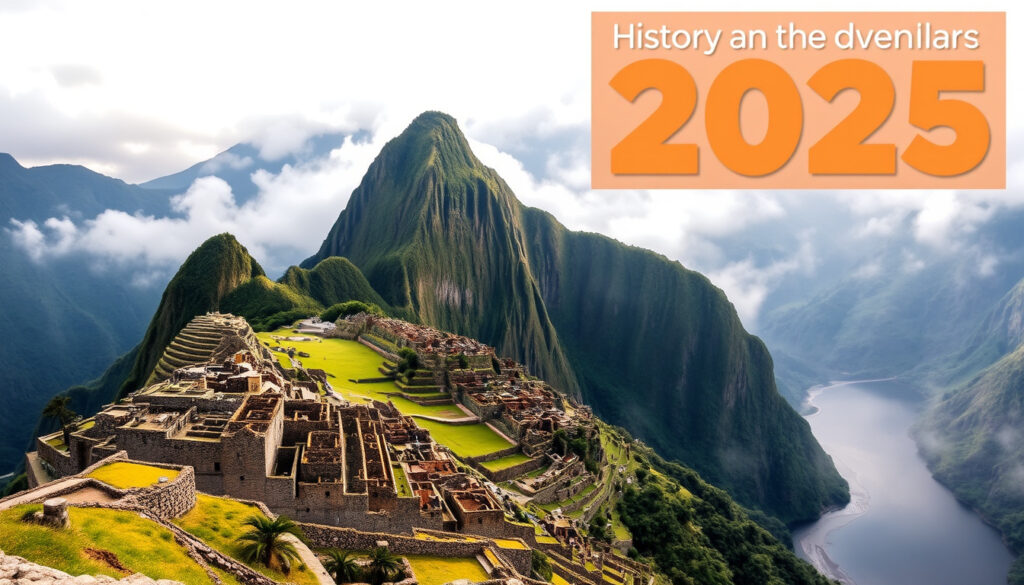
Machu Picchu – History, Hikes, Tickets, and 2025 Tips
Machu Picchu, the 15th-century Inca citadel perched on a ridge in the Peruvian Andes, draws millions of visitors each year. But beyond the postcard views lies a site full of history, engineering marvels, and unanswered questions. This guide covers everything from its location and builders to ticket logistics and the best hikes — all updated for 2025 travel.
Whether you are planning your first trip or simply curious about the “Lost City of the Incas,” the information here draws on well‑established facts and clearly notes where scholarly uncertainty remains. The goal is to give you a reliable, neutral foundation for understanding one of the world’s most remarkable archaeological sites.
Which Country Is Machu Picchu In?
Key Insights at a Glance
- Machu Picchu is the most iconic archaeological site in South America, attracting over 1.5 million visitors annually.
- Despite its fame, the original purpose of Machu Picchu remains a historical mystery — leading theories include a royal estate or religious sanctuary.
- The site was never found by Spanish conquistadors, which is why it remains so well‑preserved.
- Access is strictly regulated: you must have a pre‑booked ticket and a guide is required for most visitors as of 2025.
- The two most popular ways to reach Machu Picchu are the multi‑day Inca Trail hike or the train from Cusco/Ollantaytambo.
Snapshot Facts
| Field | Detail |
|---|---|
| Full Name | Historic Sanctuary of Machu Picchu |
| Location | Eastern Cordillera, Southern Peru |
| Nearest City | Cusco (approx 80 km NW) |
| Construction Period | c. 1450 – 1460 AD |
| Rediscovered | 1911 by Hiram Bingham |
| UNESCO Listed | 1983 |
| Annual Visitors | ~1.5 million (pre‑pandemic) |
| Pronunciation | Mah‑choo Pee‑choo |
Machu Picchu sits in the Machupicchu District, Urubamba Province, Cusco Region, Peru. It lies on a ridge above the Urubamba River in the Sacred Valley, part of the Vilcabamba‑Andes mountain range. The name itself, from Quechua, is commonly interpreted as “Old Mountain.”
Who Built Machu Picchu and What Was It Used For?
The strongest consensus among historians attributes the construction of Machu Picchu to Pachacuti Inca Yupanqui (Pachacuti), the Inca emperor who ruled in the 15th century. Radiocarbon dating and scholarly summaries place the period of occupation roughly between 1420 and 1530, with the main building phase around 1450.
What Was Its Purpose?
The exact function of Machu Picchu is still debated. Most evidence points to it being a royal estate or retreat for Pachacuti, with ceremonial and religious functions. Some sources describe it as a palace, others as a sacred precinct, and a few have suggested a fortress‑like settlement. The strongest consensus is that it was an elite Inca site tied to Pachacuti, not a typical urban city. Britannica notes that the site’s precise role remains a subject of study.
Modern scholars agree that the purpose was likely multi‑layered — a combination of royal residence, religious sanctuary, and administrative center. But no single theory has been definitively proven, and the site’s exact role in the Inca Empire remains one of its enduring mysteries.
How Many People Lived There?
Estimates commonly center on about 1,000 residents, with some sources giving a range of 1,000–1,200 at its peak. The site appears to have been occupied for only about a century before being abandoned, likely as the Spanish conquest destabilized the empire.
How Do You Get to Machu Picchu (Hike vs Train)?
The standard gateway city is Cusco. From there, travelers have two main options: the train or a multi‑day hike. The train takes you to Aguas Calientes (Machu Picchu Pueblo), from which buses run up to the citadel. The most famous hiking route is the Inca Trail, a multi‑day trek that requires a permit and is controlled by timed entry. For official details on routes and permits, the Peru Travel website provides comprehensive guidance.
Other popular hikes include the climbs up Huayna Picchu and Machu Picchu Mountain, both of which offer stunning viewpoints but also require separate permits and advance booking.
Access to all hiking routes is strictly controlled by permits and timed entry. Plan well ahead — especially for the Inca Trail, which often sells out months in advance. The sources confirm that advance booking is essential, particularly in peak season.
Do You Need a Guide?
As of 2025, a guide is required for most visitors. The site’s fragile preservation makes it mandatory to follow marked circuits and rules. Independent hiking without a guide on the Inca Trail is not permitted; all trekkers must go with a licensed tour operator.
When Is the Best Time to Visit and What Should You Pack?
Peak visitation occurs during the dry season, especially June and July. These months offer clearer skies but also the largest crowds. Shoulder months like April, May, and August can provide a good balance of weather and fewer visitors. National Geographic highlights the site’s remarkable preservation and the seasonal patterns that affect the visitor experience.
What to Pack
- Comfortable hiking shoes
- Rain jacket
- Sun protection (hat, sunscreen, sunglasses)
- Water and snacks
- Your passport for entry verification
- Layered clothing for changing temperatures
Machu Picchu sits at 2,430 m (7,970 ft). While not as high as Cusco (3,400 m), some visitors experience altitude effects. Stay hydrated, avoid alcohol, and consider acclimatizing in Cusco for a day or two before visiting.
What Are the Most Fascinating Facts About Machu Picchu?
The site is one of the best‑preserved examples of classic Inca stone architecture, featuring major structures such as the Temple of the Sun, Temple of the Three Windows, and the Intihuatana stone. The masonry is finely cut dry‑stone, fitted without mortar — a hallmark of Inca engineering. History.com notes that the citadel’s construction reflects the advanced knowledge of the Inca builders.
Timeline of Key Events
- c. 1450 – Construction of Machu Picchu begins under Inca emperor Pachacuti.
- c. 1532 – Spanish conquest begins; Machu Picchu abandoned (never conquered).
- 1572 – Fall of the Inca Empire; Machu Picchu passes into obscurity.
- 1911 – Hiram Bingham brings Machu Picchu to world attention.
- 1983 – Designated a UNESCO World Heritage Site.
- 2007 – Voted one of the New Seven Wonders of the World.
- 2020‑2021 – Temporary closure due to COVID‑19; new visitor rules implemented.
- 2024‑2025 – New ticketing system and capacity limits enforced.
Pronunciation: the name is said Mah‑choo Pee‑choo. It is the most visited tourist attraction in Peru, with approximately 1.5 million visitors per year (pre‑pandemic). Ticket prices range from roughly $45 to $75 USD, depending on the circuit and whether you include Huayna Picchu.
What Was Machu Picchu’s Purpose? What We Know and What Remains Uncertain
| Established Information | Information That Remains Unclear |
|---|---|
| Machu Picchu is located in Peru at 2,430 m elevation. | The exact original purpose (royal estate vs. religious site vs. administrative center) is debated. |
| It was built by the Inca Empire in the 15th century. | Why it was abandoned remains unclear. |
| It is a UNESCO World Heritage Site. | The exact population that lived there is unknown. |
| Access requires a pre‑booked ticket and guide (as of 2025). | Hiram Bingham may not have been the first outsider to visit (locals knew of it). |
How Does Machu Picchu Fit Into Inca Civilization and Modern Tourism?
The Incas engineered the site on a steep ridge using no mortar, fitting stones so precisely that they have survived earthquakes for centuries. Because Spanish colonizers never found Machu Picchu, it remained largely intact, offering an unparalleled window into Inca architecture and urban planning. Wikipedia provides a detailed overview of the site’s historical and cultural significance.
Today, tourism both funds conservation and threatens it. The Peruvian government regulates daily visitor numbers to protect the fragile structure. Compared to other Inca sites like Sacsayhuamán and Ollantaytambo, Machu Picchu is the most famous but also the most restricted.
What Do Official Sources Say About Machu Picchu?
“Machu Picchu stands 2,430 m above sea‑level, in the middle of a tropical mountain forest, in an extraordinarily beautiful setting.”
— UNESCO
“Machu Picchu is a 15th‑century Inca citadel located in the Eastern Cordillera of southern Peru on a mountain ridge.”
— Wikipedia
What Should You Know Before You Go?
Visitors should book tickets at least three months in advance for peak season (May‑September). Expect continued regulation of visitor numbers to protect the site. New virtual tour options and AI‑guided experiences are emerging for 2025 and beyond. For practical planning, you can start from Cusco, the main gateway city. If you plan to hike, the Inca Trail is the classic route, but permits sell out quickly, so book early. Additional insights on preservation efforts can be found through National Geographic.
Frequently Asked Questions
How do you pronounce Machu Picchu?
It is pronounced Mah‑choo Pee‑choo.
How much does it cost to visit Machu Picchu?
Tickets range from approximately $45 to $75 USD depending on the circuit and whether you include Huayna Picchu.
Can you see Machu Picchu from Rainbow Mountain?
No. They are in different mountain ranges, but many travelers visit both from Cusco.
What should I pack for Machu Picchu?
Comfortable hiking shoes, rain jacket, sun protection, water, snacks, and your passport for entry verification.
How many visitors does Machu Picchu get per year?
Approximately 1.5 million people visit annually, with daily caps in place to reduce overcrowding.
How do I get to Machu Picchu from Cusco?
Most travelers take a train from Cusco or Ollantaytambo to Aguas Calientes, then a bus up to the citadel.
Is altitude sickness a concern at Machu Picchu?
The elevation is 2,430 m, which is moderate. Acclimatizing in Cusco for a day or two is recommended.
Do I need a guide to visit Machu Picchu?
Yes, as of 2025 a guide is required for most visitors. Independent hiking on the Inca Trail is not allowed.
What is the best time of year to visit?
The dry season from May to September offers the best weather, but also the largest crowds.
How long does the Inca Trail take?
The classic Inca Trail is a 4‑day, 3‑night trek. Shorter alternatives are also available.
For more detailed planning, see our Cusco travel guide and the Inca Trail hiking guide.
More related posts
 Heath Ledger – Biography, Death, Joker Role, and Awards
 What Does NRS Mean – Snapchat, Medical & Gaming Guide
 James Trafford – Height, Age, Family, Clubs & Contract
 Harriet Cains – Age, Career and Bridgerton Role
 North Face Puffer Jacket – Complete Guide to Warmth Fit and Care
 Ian Huntley – Dies From Blunt Head Injury After Prison Attack
 Eric Clapton – Biography, Songs, Net Worth and Tour 2025/2026
 Ford Kuga for Sale – Used Deals, Prices and Buying Guide