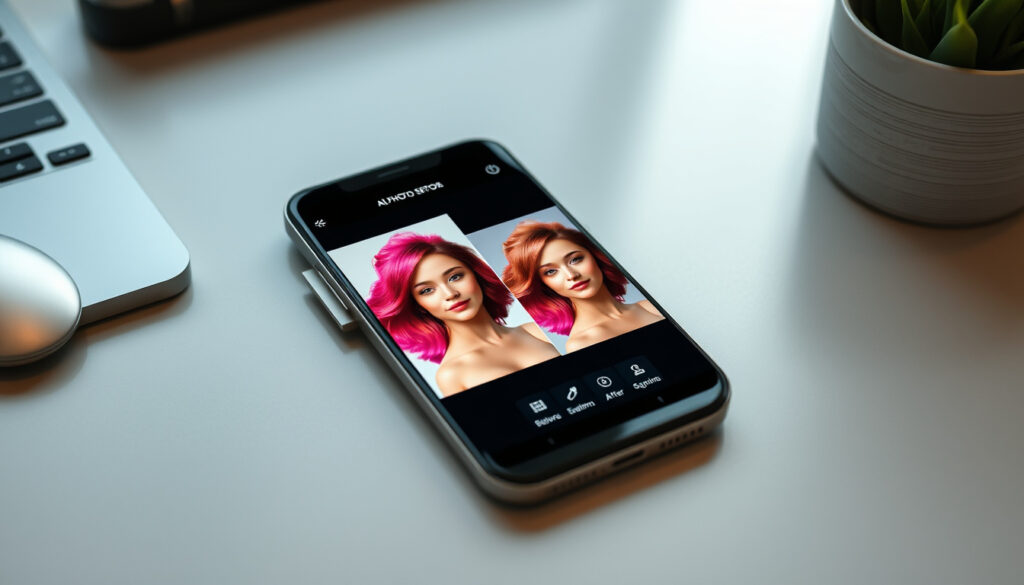
Ai Apps 2025 – Best Free and Paid Options for Android and Photos
The mobile app ecosystem has been reshaped by artificial intelligence. From chatbots that write essays to photo editors that restore old family pictures, AI apps now cover almost every digital task. But with hundreds of tools available, separating the essential from the hype requires a clear look at what actually works.
This article reviews the top AI apps in 2025 across categories — general assistants, photo tools, text humanizers, and detection software — with a focus on free options, Android availability, and real-world usefulness.
No single app currently combines text humanization, photo enhancement, and AI detection in one free package. Instead, the best results come from pairing dedicated tools for each task.
What Are the Top 5 AI Apps in the World?
The app market is crowded, but a handful of names dominate searches and downloads. According to keyword data and app store rankings, ChatGPT, Gemini, and Claude lead the chatbot segment, while niche tools for photos and humanization are growing fast.
- ChatGPT, Gemini, and Claude dominate the AI app market, but niche apps for photos and humanizers are growing fast.
- The majority of top AI apps offer a freemium model, with limited free tiers and premium subscriptions.
- AI detection and humanizer tools are seeing high search demand, indicating a need for content authenticity tools.
- Android-specific AI app queries remain strong, yet many listicles treat mobile apps generically.
- Photo enhancement apps like Remini and Facetune have carved out a loyal user base separate from general chatbots.
- Humanizer tools such as Quillbot and Clever Humanizer are increasingly used by students and content creators.
- Subscription consolidation — all-in-one apps like Nova — may gain traction over single-purpose tools.
| App Name | Category | Best For | Pricing | Platform |
|---|---|---|---|---|
| ChatGPT | Chatbot | General Q&A, writing | Free + $20/month | iOS, Android, Web |
| Gemini | Chatbot | Google ecosystem | Free + $20/month | Android, Web |
| Claude | Chatbot | Long-form analysis | Free + $20/month | iOS, Web |
| Nova | AI Assistant | Android all-in-one | Free with in-app purchases | Android |
| Remini | Photo Enhancer | AI photo restoration | Free trial + subscription | iOS, Android |
| Midjourney | Image Generation | Creative art | Paid $10+ | Web (Discord) |
| Originality.ai | AI Detector | Plagiarism detection | Paid $14.95/month | Web |
| Humanize AI | Text Humanizer | Bypassing AI detection | Free + paid | Web |
Which AI Apps Are Best for Free Use?
Cost is a major factor for most users. Many popular AI apps offer a functional free tier, but the extent of what you can do without paying varies widely. Chatbots like ChatGPT and Gemini provide generous free usage, while specialized tools like Originality.ai require a subscription from the start.
Free tiers typically include message caps, lower processing speed, or limited model access. For occasional use, free versions are often sufficient. For daily professional use, a paid subscription is almost always necessary.
ChatGPT and Gemini Lead Free Chatbots
ChatGPT by OpenAI remains the most widely used free AI chatbot, available on iOS, Android, and web. Its free tier includes access to GPT-3.5 and limited GPT-4 queries. Gemini, Google’s counterpart, is deeply integrated into Android and also offers a robust free plan with access to Google’s latest models.
Free Text Humanizers
For rewriting AI-generated text, Quillbot offers a 100% free unlimited humanizer accessible via web and app, as reported by its official site. Clever Humanizer provides free rewrites with no signup required. Both are web-based but work well in Android browsers.
Free Photo Tools
Facetune and Lensa offer free tiers with basic AI retouching features. Facetune’s free version includes one-tap skin smoothing and teeth whitening, while Lensa provides free background replacement and AI avatars with watermarks on exports.
What Are the Best AI Apps for Android?
Android users have access to most major AI apps, but platform integration varies. Some tools are web-first, while others have dedicated Android apps on Google Play. The distinction matters for performance and offline use.
Native Android Apps
Gemini is built into Android devices and offers the deepest integration, including voice assistant functionality. Nova is an Android-exclusive AI assistant that bundles chat, image generation, and productivity tools into a single app with in-app purchases. Both are available on Google Play.
Web-Based Tools That Work on Android
Many of the best text humanizers — including Walter Writes, Rephrasy.ai, and Clever Humanizer — are web-based and function well in mobile browsers. BypassGPT stands out as one of the few that offers a dedicated Android app for on-the-go use, as noted in comparisons on Rephrasy’s blog.
Photo Editing on Android
Facetune and Lensa both have full-featured Android apps. According to Built In, Facetune offers one-tap AI retouching and an avatar generator directly on Android devices.
Which AI Apps Are Best for Photos?
Photo AI apps fall into two categories: generative (creating images from text) and enhancive (improving existing photos). For humanization — making AI-generated images look more realistic — retouching tools are currently the most effective option.
There is no mainstream app that specifically humanizes AI images to bypass image detectors. Instead, users rely on retouching apps like Facetune to fix skin texture, eyes, and lighting, making generated portraits appear more natural.
Photo Enhancement Apps
Facetune (free + $20/month premium) provides one-tap AI retouching including skin smoothing, teeth whitening, and eye brightening. Lensa (free + premium) offers AI photo and video editing, background replacement, and AI avatars. Both are available on Android via Google Play.
AI Image Generation
Midjourney remains the leading AI image generator, though it is accessed via Discord rather than a dedicated mobile app. Remini specializes in AI photo restoration and enhancement, making old or low-resolution images sharper. It offers a free trial with subscription pricing thereafter.
The AI Detector & Humanizer App
An app called AI Detector & Humanizer (package ID io.zyur.wordect) is available on Google Play and claims to analyze images. According to its store listing, it primarily focuses on text detection — plagiarism and AI text identification — rather than photo enhancement. It is not a substitute for dedicated photo editing tools.
What Is an AI Humanizer and Which Apps Offer It?
AI humanizers are tools that rewrite text generated by large language models to make it sound more natural and less detectable by AI content classifiers. They adjust word choice, sentence rhythm, and structure to mimic human writing patterns. The demand for these tools is reflected in search volumes — the phrase “AI humanizer” sees around 60,500 searches.
AI detectors like Originality.ai analyze text for patterns common in machine-generated content — such as uniform sentence length, repetitive transitions, and low perplexity. Humanizers reverse these signals by introducing variation and natural inconsistencies.
Top Free Humanizers
Quillbot offers a 100% free unlimited humanizer available on web and as a mobile app. Clever Humanizer requires no signup and runs entirely in the browser. Both are suitable for students and professionals who need occasional rewrites without paying.
Highest Detection-Bypass Rates (Paid)
When accuracy matters most, Walter Writes and Rephrasy.ai are cited as the top performers. According to reviews on Walter Writes, Walter Writes passes both Turnitin and GPTZero reliably. Rephrasy.ai additionally bundles a built-in AI detector and plagiarism checker, making it a comprehensive choice for academics.
Dedicated Android App
BypassGPT is the only major text humanizer with a dedicated Android app, according to comparisons on Rephrasy’s blog. It offers free runs and paid tiers, making it the most convenient option for mobile users who prefer not to work in a browser.
AI detection and humanization are in a constant cycle of improvement. No humanizer guarantees 100% bypass of every detector. Accuracy varies by tool, content length, and topic. Human-written text that is highly structured can also be flagged as AI-generated.
What Are the Emerging AI Apps and AI News to Watch in 2025?
The AI app landscape is shifting toward specialization and deeper OS integration. Several trends are shaping what comes next.
- Late 2022 – ChatGPT launches, sparking a mobile AI app boom. The ChatGPT app arrives on iOS and Android months later.
- 2023 – 2024 – Google launches Gemini, Claude gains popularity, and photo AI apps like Remini and Facetune surge in downloads.
- 2025 – AI humanizer and detection tools enter mainstream use. The term “emergent AI” begins appearing in industry discussions.
- 2026 (present) – AI apps become standard productivity tools. The freemium model dominates, and hundreds of apps are available across categories.
Emerging trends include deeper integration of AI assistants into operating systems — Gemini is already embedded in Android — and a rise in specialized apps for medical, legal, and educational use. Subscription consolidation is also underway: all-in-one apps like Nova may reduce the need for multiple single-purpose tools.
What Is the Difference Between Free and Paid AI Apps?
The line between free and paid AI apps is not always clear. Some tools offer genuinely useful free tiers; others restrict core features behind a paywall. Understanding the trade-offs helps users choose where to invest.
Established Information
- ChatGPT, Gemini, and Claude are widely recognized as top AI chatbots with free tiers.
- Many AI apps have free tiers; actual features and usage caps vary significantly.
- AI humanizer tools exist and are actively used to modify AI-generated text.
- Photo retouching apps like Facetune offer free basic editing with watermarked exports.
- AI detectors like Originality.ai require payment for full access.
What Remains Unclear
- Exact rankings of “top 5 AI apps in the world” are subjective and change frequently based on updates and new releases.
- Whether “best” free apps meet all user needs depends heavily on individual use cases and frequency.
- The effectiveness of AI detection versus humanizer tools is an ongoing arms race with no permanent winner.
- Long-term privacy implications of cloud-based AI apps are still being studied and debated.
Is There a List of All AI Apps?
No single authoritative list of every AI app exists. The category is too broad and changes too quickly. Curated lists like the one in this article cover the major categories — chatbots, photo editors, text humanizers, detectors, and productivity assistants — but new apps appear weekly on Google Play and the Apple App Store.
For the most current inventory, browsing app store categories under “AI” or “Artificial Intelligence” is the most reliable method. As noted by PCMag in their 2026 chatbot review, the definition of “AI app” itself is expanding as more tools embed machine learning features without advertising them as AI products.
Platform exclusivity also affects availability. Gemini is deeply integrated into Android, while Claude is iOS and web-first. Midjourney remains Discord-only. Users may need to consider their operating system before choosing a tool.
What Do the Reviews and Data Say?
Expert reviews and app store metrics provide useful benchmarks, though they must be interpreted with context. PCMag’s 2026 review of AI chatbots, available on their site, tests each tool on response accuracy, speed, and feature depth. Lindy’s 2026 platform review adds a productivity-focused lens, rating tools on integration and workflow fit.
“Free tiers of major AI apps are sufficient for casual use, but professionals should budget for at least one paid subscription to access advanced models and priority support.”
— PCMag, Best AI Chatbots 2026
Search volume data confirms rising interest in specialized tools. “AI humanizer” receives approximately 60,500 monthly searches, while “AI detection” draws around 12,000. These numbers indicate a growing market for content authenticity tools, especially in education and publishing.
“Clever Humanizer and Quillbot are the best free text humanizers, but Walter Writes and Rephrasy.ai offer the highest detection-bypass rates when paid.”
— Walter Writes, Best AI Humanizer Tools
What Is the Outlook for AI Apps?
AI apps are moving toward tighter OS integration, greater specialization, and subscription consolidation. Google’s embedding of Gemini into Android signals a future where AI assistants are part of the system rather than separate downloads. At the same time, niche tools for medical, legal, and educational use are likely to multiply. For content creators, AI detection and humanization will become standard workflow components. The freemium model will persist, but users who need reliable, daily performance should expect to pay for at least one or two premium subscriptions. For readers looking for broader tech comparisons, see our guide on Office Desk – Best Home Office Desks and Buying Guide for ergonomic considerations when setting up a productivity space.
Frequently Asked Questions
Is there a list of all AI apps?
No single exhaustive list exists, but curated lists cover the major categories. You can also browse app stores by the ‘AI’ category for the most current options.
What is the difference between free and paid AI apps?
Free apps typically offer limited features such as message caps or lower processing speed, while paid subscriptions unlock full potential, advanced models, and priority support.
Are AI detection apps accurate?
Accuracy varies. Tools like Originality.ai claim over 99% accuracy, but false positives occur, especially with human-written text that happens to mimic AI patterns.
What does ‘use ai’ mean in the context of apps?
It generally refers to leveraging AI capabilities — such as chat, generation, or analysis — within a mobile or web app to enhance productivity or creativity.
Can I humanize AI-generated photos on Android?
No dedicated app exists for humanizing AI photos to bypass image detectors. Use retouching apps like Facetune to make AI-generated portraits look more natural.
Which AI humanizer works best for Turnitin?
Walter Writes and Rephrasy.ai are reported to have the highest bypass rates for Turnitin and GPTZero based on paid testing and user reviews.
Is BypassGPT available as a native Android app?
Yes, BypassGPT offers a dedicated Android app, making it the most convenient text humanizer for mobile users who prefer not to use a browser.
What are the best free photo editing AI apps?
Facetune and Lensa both offer free tiers with basic AI retouching features, including skin smoothing, background replacement, and AI avatars.
How do AI detectors work?
AI detectors analyze text for patterns common in machine-generated content, such as uniform sentence length and low perplexity, flagging text that matches those signals.
Will AI apps replace single-purpose tools?
All-in-one apps like Nova are gaining traction, but specialized tools still offer superior quality for specific tasks like photo editing or plagiarism detection.
More related posts
 Pat Cash – The 1987 Wimbledon Champion’s Life Today
 Cast of the Penguin – Full List and Character Breakdowns
 Noddy Holder – Biography, net worth and health update 2025
 Kemi Badenoch – Biography, Career, Family and Political Views
 Mt Vesuvius Guide 2025 – Tickets, Hiking and Eruption History
 Kim Cattrall – Age, Net Worth, Movies, and Life After Sex and the City
 Tracy Beaker – Complete Guide to the Iconic Character
 Tara Sutaria – Age, Height, Movies and Personal Life