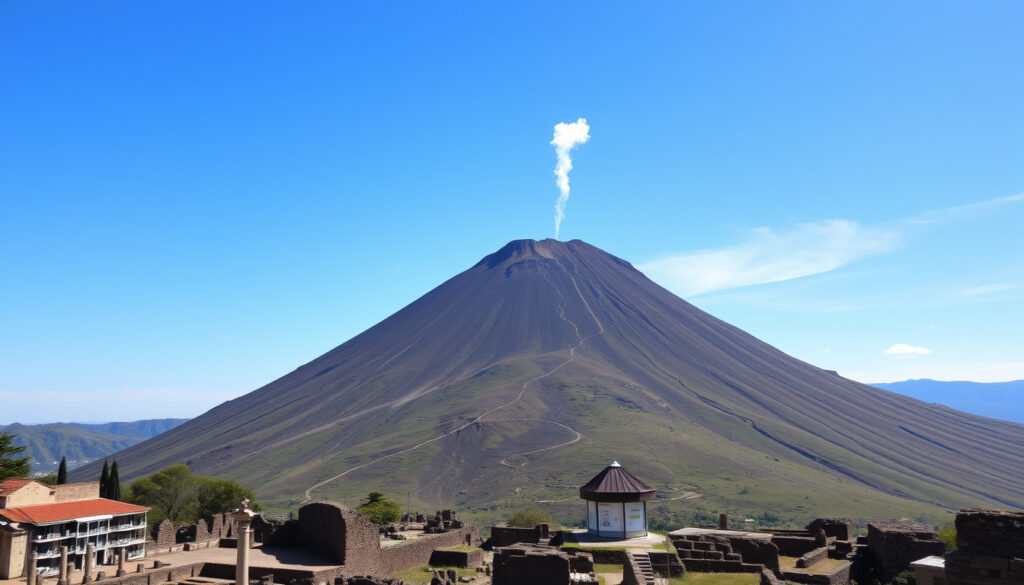
Mt Vesuvius Guide 2025 – Tickets, Hiking and Eruption History
Standing alone above the Bay of Naples, Mount Vesuvius remains Europe’s most storied and potentially dangerous volcano. It is the only active volcano on mainland Europe to have erupted in the last century, a fact that attracts millions of visitors each year.
The volcano last erupted in 1944, yet it is still classified as active and under continuous monitoring. For travelers, Vesuvius represents a rare chance to stand at the rim of a live stratovolcano and survey the landscape it once devastated.
This guide covers what is known about visiting Vesuvius in 2025, including the ticket system, hiking conditions, and the historical eruptions that shaped the region.
Is Mount Vesuvius Still Active?
Yes. Vesuvius is an active stratovolcano and is monitored around the clock by Italy’s volcanological authorities. As of early 2025, sources describe it as being in a quiescent or green-alert phase, meaning no immediate eruption is indicated.
Active stratovolcano
1944
Naples, Italy (near Pompeii)
~30 minutes (shuttle) + 20–30 min walk
- Vesuvius is the only active volcano on mainland Europe that has erupted in the last century.
- The AD 79 eruption was a Plinian event that destroyed Pompeii and Herculaneum.
- The volcano is heavily monitored and considered one of the most dangerous volcanoes due to population density.
- Visitors must buy a timed entry ticket online in advance; the trail is moderate and partially paved.
| Fact | Detail |
|---|---|
| Height | 1,281 m (4,203 ft) |
| Crater diameter | ~450 m (1,476 ft) |
| Current status | Active, quiet phase |
| Primary hazard | Plinian eruption risk |
| Annual visitors | ~3 million per year |
Because the volcano remains active, access can be restricted if authorities detect weather or safety issues. The volcano is classified as one of the most dangerous in the world, largely because over 600,000 people live in the “red zone” around its base.
The INGV Vesuvius Observatory provides weekly updates on volcanic activity. As of early 2025, no elevated threat level has been reported and the volcano remains in a baseline quiet state.
When Did Mount Vesuvius Last Erupt?
The most recent eruption of Mount Vesuvius took place in 1944, during World War II. The event destroyed the towns of San Sebastiano and Massa di Somma and was witnessed by Allied soldiers stationed in the area.
The AD 79 Eruption and Pompeii
Vesuvius is world-famous for its AD 79 eruption, a cataclysmic Plinian event that buried the Roman cities of Pompeii and Herculaneum under meters of ash and pumice. Thousands of people were killed, and the cities remained entombed for nearly 1,700 years until their rediscovery.
Later Eruptions
The volcano has erupted many times since AD 79. A major eruption in 1631 killed about 4,000 people and covered several villages. Another large sub-Plinian eruption occurred in 1906, the same year the Vesuvius Observatory was founded. A sustained eruptive period lasted from 1913 until the final 1944 eruption.
While Vesuvius has a long history of eruptions, the exact timing of the next major event cannot be predicted. Evacuation plans for the red zone are tested regularly, but the outcome of a full-scale event remains uncertain.
How Do I Get Tickets to Visit Mount Vesuvius?
Tickets for the crater trail are sold online in advance only. There is no reliable same-day ticket office at the summit. Standard adult admission is commonly reported at €10, with reduced prices for some students and free entry for eligible visitors.
Timed Entry System
Entry is managed through a timed slot system. Several sources note that late arrivals may be denied entry, so advance planning matters. One source reports a 90-minute arrival window around the booked time slot, though exact enforcement can vary by platform and season.
Opening Hours
The park opens daily at around 9:00 AM year-round. Closing times vary by season: January, February, November, and December at about 3:00 PM; March and October at about 4:00 PM; April, May, June, and September at about 5:00 PM; and July and August at about 6:00 PM. Weather, safety alerts, or volcanic monitoring can lead to temporary closures.
Can You Visit Without a Tour?
Yes. Independent visits are possible if you arrange your own transport and buy a timed entry ticket online. Organized tours are common, especially for visitors who want to combine Vesuvius with Pompeii in one day.
Summer demand can be high, and multiple sources warn that slots may sell out ahead of time. Booking through the official Vesuvius National Park site is the most reliable method.
How Long Is the Hike to the Crater of Vesuvius?
The standard visitor route is the Gran Cono, also called the Great Cono trail or Path No. 5. It is a short but steep hike on loose volcanic gravel rather than a technical climb.
Trail Length and Duration
Reported estimates vary slightly by source, but the hike is generally about 1.5 to 4 kilometers round trip and takes about 1.5 to 2.5 hours, including time spent walking the crater rim and taking photos.
What to Bring
Because the path is exposed and gravelly, sturdy shoes and water are commonly advised. The summit area can be windy and hot in summer. Mobile signal at the summit is reported as poor by some sources, so tickets and transport details should be saved in advance.
What to Expect at the Summit
The crater rim offers views over Naples, the Bay of Naples, and often across to Capri and the surrounding Campania landscape in clear weather. The trail focuses on the crater and panoramas rather than a long wilderness hike.
History of Eruptions at Mount Vesuvius
- AD 79 — Catastrophic Plinian eruption; Pompeii and Herculaneum buried; thousands killed.
- 1631 — Major eruption; 4,000 deaths; covered several villages.
- 1906 — Large sub-Plinian eruption; Vesuvius Observatory founded.
- 1913–1944 — Sustained eruptive period culminating in a flank eruption during WWII.
- 1944 — Most recent eruption; destroyed San Sebastiano and Massa di Somma.
- 1995 — Vesuvius National Park officially established.
What Is Known and What Remains Uncertain About Vesuvius
| Established Information | Information That Remains Unclear |
|---|---|
| Vesuvius is an active stratovolcano that last erupted in 1944. | The exact timing of the next major eruption cannot be predicted. |
| The AD 79 eruption killed thousands and destroyed Pompeii. | Evacuation plans for the Vesuvius red zone are tested, but the outcome of a full-scale event remains uncertain. |
| Visitors must buy tickets in advance via official park channels. | The precise enforcement of the 90-minute arrival window depends on the vendor and season. |
Why Vesuvius Matters in a European Context
Vesuvius is unique among European volcanoes because of its location within one of the most densely populated volcanic regions in the world. Over 600,000 people live in the red zone nearest the crater. The volcano’s frequent eruptive history and the catastrophic outcome of the AD 79 event make it one of the most studied and monitored volcanoes on the planet.
What Do Primary Sources Say About Vesuvius?
“It is regarded as one of the most dangerous volcanoes in the world.”
— Wikipedia — Mount Vesuvius
The official Vesuvius National Park authority defines the rules for trails, access, and permits. The American Museum of Natural History provides an educational explanation of the Plinian eruption mechanics that characterize Vesuvius’s most dangerous events.
What Should Visitors Do Next When Planning a Trip?
For the most current conditions, travelers should monitor activity reports from the INGV Vesuvius Observatory. Verified reports as of early 2025 indicate no new threat levels. Many visitors pair the crater hike with a visit to Pompeii Archaeological Park, often starting with Pompeii in the morning and Vesuvius later in the day or vice versa.
Frequently Asked Questions
How much does a ticket to Mount Vesuvius cost?
Standard entrance to the crater trail is approximately €10 per person when booked through the official park site. Reduced rates apply for some students and eligible visitors.
Can you drive up Mount Vesuvius?
No. All visitors must park at a designated zone and take a shuttle bus or hike up to the crater entrance.
How do you pronounce Vesuvius correctly?
The correct English pronunciation is vuh-SOO-vee-us. In Italian, it is ve-ZOO-vyo.
Is Mount Vesuvius visible from Pompeii?
Yes, Mount Vesuvius is clearly visible from the Pompeii archaeological site, about 10 kilometers (6 miles) away.
How do I get to Vesuvius from Naples?
From Naples, take the Circumvesuviana train to Pompei Scavi or Ercolano Scavi, then continue by shuttle bus. Driving takes between 25 minutes and 1 hour depending on your starting point.
What type of volcano is Mount Vesuvius?
Vesuvius is a stratovolcano, also known as a composite volcano, characterized by explosive Plinian eruptions.
How dangerous is Mount Vesuvius today?
It is considered one of the most dangerous volcanoes in the world due to its explosive eruption style and the population density in the surrounding area. Continuous monitoring is in place.
More related posts
 I Kissed a Boy – Seasons, Cast & BBC iPlayer Guide
 Sergio Ramos 2026 – His Current Club, Wife, Net Worth and World Cup Dream
 Angus Energy Share Price – Latest News and Future Outlook
 Co-op Live Events – 2025 Schedule, Tickets & Guide
 Cast of Deep Cover 2025 – Full Actors List and Roles
 Anna Kalinskaya – WTA Ranking, Age, Career and Instagram Profile
 Miley Cyrus – Biography, Age, Net Worth and 2025 Plans
 Stephanie McGovern – Partner, Family, Career & Privacy