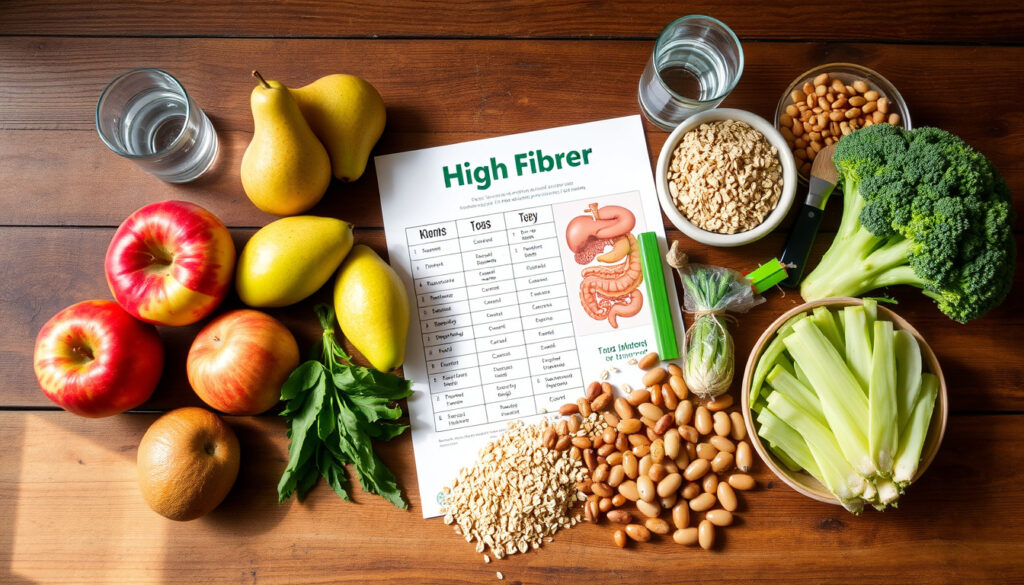
High-Fiber Foods Chart for Constipation – Free PDF Guide
Constipation affects up to one in five people, and dietary fibre is often the first recommendation. But knowing which foods to eat and how much fibre they contain can be confusing. A high‑fibre foods chart provides a clear reference to help you choose the right foods for relief. This article draws on NHS‑style patient leaflets, hospital guides, and official dietary advice to give you a complete, printable chart tailored for adults, children, pregnant women, and those aiming for weight loss.
What Are the Best High-Fiber Foods for Constipation? (Complete Chart)
A complete high-fiber foods chart organized by food group, with fiber content per standard serving (grams)
Adults, children, pregnant women, and those seeking weight loss – with tailored food lists
NHS, Mayo Clinic, Bladder & Bowel UK, and general dietary guidelines
Printable chart (PDF) + interactive sortable table + expert tips
Key Insights About High-Fiber Foods and Constipation
- Increasing fibre gradually – by about 2–3 grams per day – helps prevent bloating and gas, which are common reasons people stop.
- Both soluble fibre (oats, apples) and insoluble fibre (wheat bran, vegetables) are needed: soluble softens stool, insoluble speeds transit.
- Hydration is critical: fibre absorbs water; without enough fluid, constipation can worsen.
- Children and pregnant women have different fibre needs and safe choices – for example, bran is not recommended for young children.
- A high‑fibre diet is often used to help with constipation, as stated in the NHS patient diet leaflet.
- Core high‑fibre foods include wholegrain cereals, wholemeal bread, brown rice, pulses, fruit with skins, and vegetables.
High-Fiber Foods Chart with Fibre Content
| Food Category | Examples (per standard portion) | Fibre (g) | Notes |
|---|---|---|---|
| Breakfast cereals | Weetabix (2 biscuits) | 4.4 | Source: NHS leaflet |
| Bread | Wholemeal bread (2 slices) | 4.2 | Source: NHS leaflet |
| Grains | Brown rice (100 g cooked) | 1.1 | Source: NHS leaflet |
| Grains | Wholemeal pasta (100 g cooked) | 3.6 | Source: NHS leaflet |
| Legumes | Chickpeas (140 g cooked) | 7.7 | Source: NHS leaflet |
| Legumes | Kidney beans (½ cup) | 8.0 | Source: Boston Children’s chart |
| Fruit | Raspberries (1 cup) | 8.0 | Source: Children’s Hospital Colorado |
| Fruit | Apple or pear with skin (1 medium) | 5.0 | Source: Children’s Hospital Colorado |
| Fruit | Prunes (3) | 4.0 | Source: Children’s Hospital Colorado |
| Vegetables | Artichoke (1 medium) | 7.0 | Source: Children’s Hospital Colorado |
| Vegetables | Broccoli (1 cup cooked) | 5.1 | Combines soluble and insoluble fibre |
| Nuts & Seeds | Chia seeds (2 tbsp) | 10.6 | Also provides omega‑3s |
High-Fiber Foods Chart for Specific Needs: Kids, Pregnancy, and Weight Loss
Safe High-Fiber Foods for Children with Constipation
The West Suffolk NHS child leaflet recommends wholemeal bread, high‑fibre cereals (like Weetabix), brown rice, wholemeal pasta, dried fruit, fruit and vegetables with skins, peas/beans/lentils, and jacket potatoes with skin. The Boston Children’s chart groups foods into “high fibre” and “good source of fibre” with clear portion sizes, which is especially useful for parents.
Introduce fibre slowly and offer plenty of water. Avoid bran for very young children – it can be too harsh.
Pregnancy-Friendly High-Fiber Foods
No pregnancy‑specific NHS leaflet was found in the search, but the same fibre‑rich foods – wholegrains, fruit, vegetables, and pulses – are the standard foods used to help constipation during pregnancy. The key caution is to increase fluids alongside fibre, because fibre works best with adequate hydration.
Combining Weight Loss and Constipation Relief with Fiber
The NHS handouts focus on fibre for digestive health, not weight loss. However, fibre‑rich foods are filling and can support satiety. For a weight‑loss‑oriented version, the best choices are vegetables, beans, lentils, fruit, oats, and whole grains, while watching portions of calorie‑dense items like nuts, seeds, and dried fruit.
The hospital handouts do not provide a dedicated weight‑loss chart. For weight management, focus on high‑volume, low‑calorie fibre sources and avoid over‑relying on dried fruit or nut butters.
Where to Find Official High-Fiber Food Charts: NHS, UK, and PDF Resources
NHS High Fibre Diet Guide (PDF)
The East and North Hertfordshire NHS Trust provides a patient leaflet (PDF) with a fibre table and sample meal ideas. It lists foods like Bran Flakes, Weetabix, Shreddies, wholemeal bread, brown rice, pulses, and vegetables, with fibre grams per portion. Download it directly from the trust’s website: NHS – High fibre diet patient information (Enherts Trust).
UK vs US Fiber Recommendations
Most whole foods are the same, but processed products (breads, cereals) vary by country. The UK NHS chart includes common UK brands and portions. The US guidelines from the Mayo Clinic and USDA also recommend 25–30 g per day. Our chart below provides both generic and UK‑specific options.
Printable Fiber Chart for Daily Use
For a child‑friendly PDF, the West Suffolk NHS Foundation Trust leaflet is available: High Fibre Diet for Children (West Suffolk NHS). Another useful printable is the Bladder & Bowel UK – Fibre Contents of Food Chart.
Some PDFs, such as the Bladder & Bowel UK chart dated 2017, are several years old. Always cross‑check portion sizes with current dietary guidelines.
How Much Fiber Do You Need for Constipation Relief? (And How to Increase Safely)
Recommended Daily Fiber Intake (Adults, Kids, Pregnancy)
Adult guidelines generally recommend 25–30 grams per day. Children’s needs vary by age – the West Suffolk child leaflet does not state a specific gram target, but Boston Children’s chart suggests “age + 5 g” up to age 20. Pregnant women are advised to aim for the same adult intake, with an emphasis on fluids.
Soluble vs Insoluble Fiber: Why Both Matter
Soluble fibre (oats, apples, carrots) dissolves in water and helps soften stool. Insoluble fibre (wheat bran, vegetables, whole grains) adds bulk and speeds passage. The NHS differentiates these in its guidance. Both are needed for balanced relief.
Tips for Gradually Adding Fiber to Your Diet
The Mayo Clinic and NHS advise increasing fibre slowly to avoid discomfort. Start by adding one high‑fibre fruit or vegetable per meal, and drink at least 8 glasses of water daily. After a few days, include a legume or whole grain serving. Adjust based on bloating.
Importance of Hydration with High Fiber
Fibre absorbs water; without enough fluid, it can actually worsen constipation. This message is consistent across all authoritative sources, including the NHS leaflet and Children’s Hospital Colorado handout.
What Is a Safe Timeline for Increasing Fiber Intake?
- Day 1–3: Add one high‑fibre fruit or vegetable per meal. Drink 8 glasses of water per day.
- Day 4–7: Include one serving of legumes or whole grains daily. Monitor stool consistency.
- Week 2: Reach your target fibre intake (25–35 g for adults) by combining all food groups. Adjust based on any bloating or gas.
How Certain Is the Evidence for High-Fiber Diets in Constipation?
| Established information | Information that remains unclear |
|---|---|
| A high‑fibre diet is effective for most cases of functional constipation. | Fibre may not help (or may worsen) constipation in some conditions like severe IBS‑C, pelvic floor dysfunction, or slow transit. |
| Gradual increase and adequate hydration are essential for success. | The optimal fibre dose for different subtypes of constipation is not well established in all populations. |
| Both soluble and insoluble fibre play complementary roles. | Individual tolerances vary widely – some people may need to avoid certain types of fibre. |
Consult a doctor if constipation persists despite dietary changes, as underlying conditions may require different treatment.
Why Fiber Is the First-Line Intervention for Constipation
Constipation is a common complaint affecting up to 20% of the population. Dietary fibre is the first‑line intervention because it increases stool bulk, softens stool, and speeds transit. However, not all fibres work the same – soluble vs insoluble, and individual tolerances vary. This chart helps users identify which foods to add, how much, and how to combine with lifestyle changes.
What Do Official Health Sources Say About High-Fiber Diets?
“Fiber-rich foods have a mix of different fiber types. Aim for about 25-30 grams of fiber a day from foods, not supplements.”
“Increase the amount of fibre in your diet to help improve your symptoms. A high fibre diet is often used to help with constipation.”
NHS (Patient Dietary Advice leaflet)
“By doing this you will increase the water content of stools making them softer and easier to pass.”
Bladder & Bowel Community
Additional authoritative guidance is available from Nutrition.gov – Dietary Fiber and the World Health Organization – Increasing dietary fibre.
What Is the Takeaway for Managing Constipation with Fiber?
Using a high‑fiber foods chart is a practical way to guide daily food choices for constipation relief. Focus on whole grains, fruits, vegetables, legumes, and adequate fluids. Increase fibre gradually, choose age‑appropriate options for children and pregnancy, and combine with hydration. For a step‑by‑step approach, see How to increase fiber in your diet without side effects and download our Printable high-fiber foods PDF chart.
Frequently Asked Questions
Can high-fiber foods cause diarrhea?
Yes, especially if you increase fiber too quickly or eat excessive insoluble fiber. This is why gradual introduction is advised.
What are high oxalate foods and should I avoid them for constipation?
High oxalate foods (e.g., spinach, almonds, rhubarb) are not directly linked to constipation, but may be an issue for people with kidney stones. They can still be part of a fiber-rich diet.
Is the list of high-fiber foods the same in the UK and US?
Most whole foods are the same, but processed products (breads, cereals) vary. The UK NHS chart includes common UK brands and portions. Our chart provides both generic and UK‑specific options.
Do I need to take fiber supplements if I eat these foods?
Ideally, food first. Supplements (psyllium, methylcellulose) can be used if dietary intake is insufficient, but should be discussed with a doctor.
More related posts
 Owen Wilson – Biography, Movies and Net Worth 2025
 What Is a Hybrid Bike – Features, Comparisons and Buying Guide
 Tyger Drew-Honey – Biography, Family and Career Facts
 Carey Mulligan – Biography, Films and Personal Life
 Lauren Phillips – Biography, Age, Awards & Social Media
 Esther Rantzen – Biography, Illness, and Campaign for Assisted Dying
 170 lbs to kg – Exact Conversion (77.11 kg)
 Daniel Levy – Leaves Tottenham After 24 Years