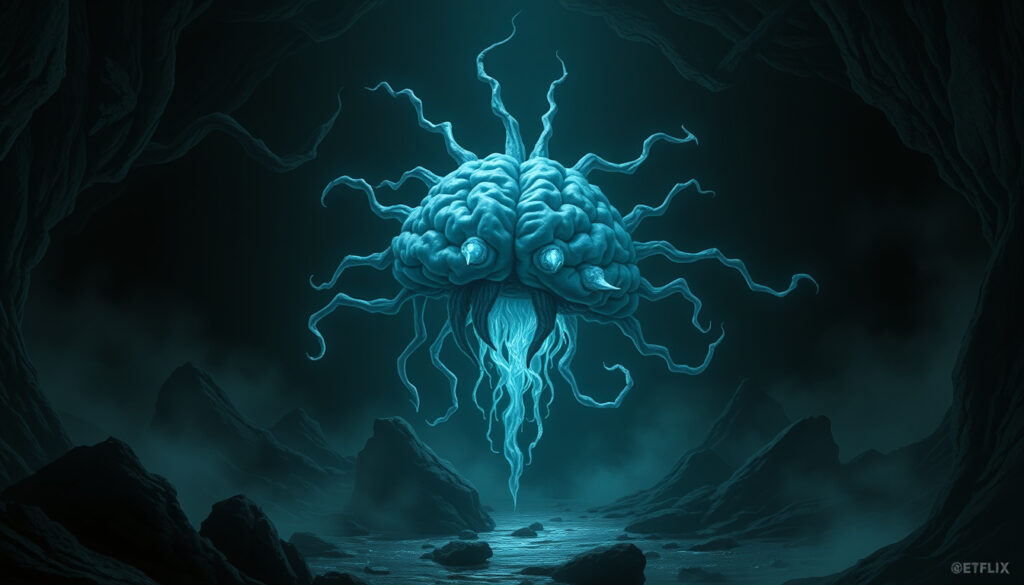
Mind Flayer – The D&D Illithid and Netflix’s Shadow Monster
The term “Mind Flayer” conjures images of both a terrifying tabletop monster and a shadowy, dimension-spanning entity from a hit Netflix series. This guide explores the creature in its two most prominent forms: the classic illithid from Dungeons & Dragons and the apocalyptic shadow monster from Stranger Things.
While they share a name and a core concept of psychic domination, the D&D mind flayer and the Stranger Things Mind Flayer are distinct entities. One is a single, tentacled aberration from the Underdark, the other a colossal hive mind controlling an entire parallel dimension. Understanding the differences is key to appreciating each franchise’s unique mythology.
The name itself is a direct reference. The creators of Stranger Things, avid D&D players, named their ultimate villain after the game’s infamous mind flayer, known for its psionic powers and hive mind structure. This connection has fueled countless fan theories and comparisons, especially with the introduction of Vecna in Season 4. For more on the origins of this terrifying name, explore the deep lore of D&D monsters.
What Is a Mind Flayer?
At its most basic, a Mind Flayer is a fictional monster defined by its potent psychic abilities and its practice of consuming the brains of sentient beings. The name is a colloquial term for the Dungeons & Dragons monster known as the illithid, but it has been adopted by other media, most notably Stranger Things. The creature’s signature abilities include telepathy, mind control, and a devastating mind blast that incapacitates foes. In both iterations, the Mind Flayer represents a profound threat to individuality and free will.
Comparing the Two Versions: A Quick Overview
The table below lays out the key distinctions between the D&D illithid and the Stranger Things shadow monster.
| Aspect | Dungeons & Dragons Illithid | Stranger Things Mind Flayer |
|---|---|---|
| Origin | The Underdark, a vast subterranean realm | The Upside Down, a parallel dimension |
| Nature | A single, intelligent aberration | A colossal, formless hive mind |
| Powers | Psionics, mind control, brain extraction | Possession, flesh manipulation, storm control |
| Weakness | Sunlight, physical damage | Fire, emotional bonds of its hosts |
| Goal | Survival, expansion of its colony | Conquest and absorption of all realities |
Origins and Evolution of the Mind Flayer
The illithid first appeared in the original Dungeons & Dragons Fiend Folio in 1981. Inspired by the works of H.P. Lovecraft and classic pulp science fiction, the mind flayer was designed as a psychic predator that enslaved other races. Over the decades, its lore expanded through supplements like Lords of Madness and the Illithid sourcebook, establishing a complex society of elder brains, mind-witnesses, and planar travelers.
In Stranger Things, the Mind Flayer was introduced in Season 2 as a looming, spider-like shadow that controlled the inhabitants of the Upside Down. Its design was heavily influenced by the D&D version, with a towering, tentacled form and a hive mind that could possess multiple victims at once. The Duffer Brothers have confirmed that the name was chosen as a direct homage to the tabletop game, cementing the connection for fans of both franchises. For a deeper dive into how the show builds its mythology, check out our analysis of Stranger Things creatures.
Key Insights into the Mind Flayer’s Abilities
Both versions of the Mind Flayer rely on psychic domination, but they execute it differently. The D&D illithid uses a targeted mind blast to stun enemies, followed by a tentacle attack to extract the brain. Its psionic powers allow it to read thoughts, control minds, and communicate telepathically across vast distances. In Stranger Things, the Mind Flayer operates more like a virus: it enters a host through a wound or orifice, then gradually takes over their body and mind, using them to spread its influence.
Another key difference lies in their vulnerability. The illithid is physically frail and cannot survive in sunlight, which is why it dwells in the darkness of the Underdark. The Stranger Things Mind Flayer, by contrast, is vulnerable to fire and to the emotional resilience of its hosts—a weakness that the characters exploit in Season 3 by using sauna steam and, later, by burning the infected. This emotional dimension adds a psychological layer to the conflict that the D&D version typically lacks.
Timeline of the Mind Flayer in Popular Culture
- 1981: The illithid debuts in the D&D Fiend Folio.
- 1985: The mind flayer appears in the D&D cartoon series.
- 1990s: Illithids become a staple in D&D video games like Baldur’s Gate and Planescape: Torment.
- 2017: The Mind Flayer appears as the primary antagonist in Stranger Things Season 2.
- 2019: The Mind Flayer returns in Stranger Things Season 3, possessing humans and forming a fleshy, kaiju-like body.
- 2022: Vecna, a powerful lich connected to the Mind Flayer, becomes the main villain in Stranger Things Season 4.
- 2023: The mind flayer remains a fan-favorite monster in D&D’s fifth edition, with updated stats in Monster Manual and Mordenkainen’s Monsters of the Multiverse.
Clarity: What the Mind Flayer Is Not
Despite the shared name, the Stranger Things Mind Flayer is not a literal illithid transported into the modern world. It is a separate entity that borrows thematic elements—psychic power, hive mind, tentacled appearance—from the D&D monster. The show’s creators have stated that the Upside Down’s Mind Flayer is more akin to a malevolent force of nature than a creature with a defined biology or society. This distinction matters for fans who want to understand the rules of each fictional world.
Similarly, not every tentacled, brain-eating monster in fiction is a mind flayer. The term specifically refers to the D&D illithid and its derivatives. Other media, such as The Legend of Zelda or Bloodborne, have similar-looking creatures, but they are not mind flayers in the canonical sense. The name carries a specific cultural and intellectual property context that should be respected.
Analysis: Why the Mind Flayer Endures
The Mind Flayer’s lasting appeal lies in its ability to tap into primal fears: the loss of control over one’s own mind, the horror of being consumed, and the terror of a faceless, collective enemy. In D&D, the illithid embodies the fear of the unknown and the alien. In Stranger Things, the Mind Flayer represents the dread of losing a loved one to an unseen force. Both versions resonate because they speak to anxieties that are deeply human.
From a narrative perspective, the Mind Flayer is a versatile antagonist. It can be a cunning, individual schemer (as in D&D) or a vast, impersonal force (as in Stranger Things). This flexibility allows storytellers to use it in multiple genres, from horror to adventure to psychological thriller. The creature’s adaptability is a key reason why it has remained relevant for over four decades.
Notable Quotes About the Mind Flayer
“The mind flayer is the quintessential psychic predator. It doesn’t just kill you—it takes everything you are and leaves an empty shell.”
— Rob Heinsoo, D&D game designer
“When we were designing the Mind Flayer for Stranger Things, we wanted something that felt ancient and unstoppable. The D&D mind flayer was the perfect template because it already had that otherworldly horror.”
— The Duffer Brothers, creators of Stranger Things
Summary: Key Takeaways
- The Mind Flayer exists in two distinct forms: the D&D illithid and the Stranger Things shadow monster.
- Both are defined by psychic powers and a hive mind, but their origins, abilities, and weaknesses differ significantly.
- The Stranger Things version was directly inspired by the D&D monster, creating a rich intertextual connection.
- The creature’s enduring popularity stems from its ability to embody deep-seated fears about mind control, consumption, and loss of identity.
- Understanding the differences between the two versions enriches the experience of both franchises.
Frequently Asked Questions
What is a Mind Flayer?
A Mind Flayer is a fictional monster defined by its potent psychic abilities and its practice of consuming the brains of sentient beings. The name is a colloquial term for the Dungeons & Dragons monster known as the illithid, but it has been adopted by other media, most notably Stranger Things.
Is the Stranger Things Mind Flayer the same as the D&D mind flayer?
No. While they share a name and a core concept of psychic domination, the D&D mind flayer and the Stranger Things Mind Flayer are distinct entities. One is a single, tentacled aberration from the Underdark, the other a colossal hive mind controlling an entire parallel dimension.
How did Stranger Things come to use the name “Mind Flayer”?
The creators of Stranger Things, avid D&D players, named their ultimate villain after the game’s infamous mind flayer, known for its psionic powers and hive mind structure. This connection has fueled countless fan theories and comparisons, especially with the introduction of Vecna in Season 4.
What are the weaknesses of a Mind Flayer?
In D&D, the illithid is vulnerable to sunlight and physical damage. In Stranger Things, the Mind Flayer is vulnerable to fire and to the emotional bonds of its hosts, which can be used to weaken its control.
Why is the Mind Flayer so popular?
The Mind Flayer taps into primal fears: loss of control, consumption, and the terror of a faceless collective enemy. Its versatility as a villain—ranging from a cunning individual to an impersonal force—makes it adaptable across genres and storylines.
First published: 2025-03-18. Last updated: 2025-03-18.
More related posts
 Wynne Evans – Strictly 2024, Career & Controversy
 Ona Batlle – Biography, Arsenal Transfer, Height and Career
 Michelle Agyemang – Age, Injury Update, and Career Profile
 Pom Pom Purin – The Complete Guide to Sanrio’s Beloved Dog
 Matthew Lillard – Age, Height, Net Worth and Iconic Roles
 Princess Margaret – Her Love Life, Children and Tragic Death
 Caitlin Clark – Biography, Stats, Height, and WNBA Career
 Cat D Car Meaning – Complete UK In urance Write-Off Guide