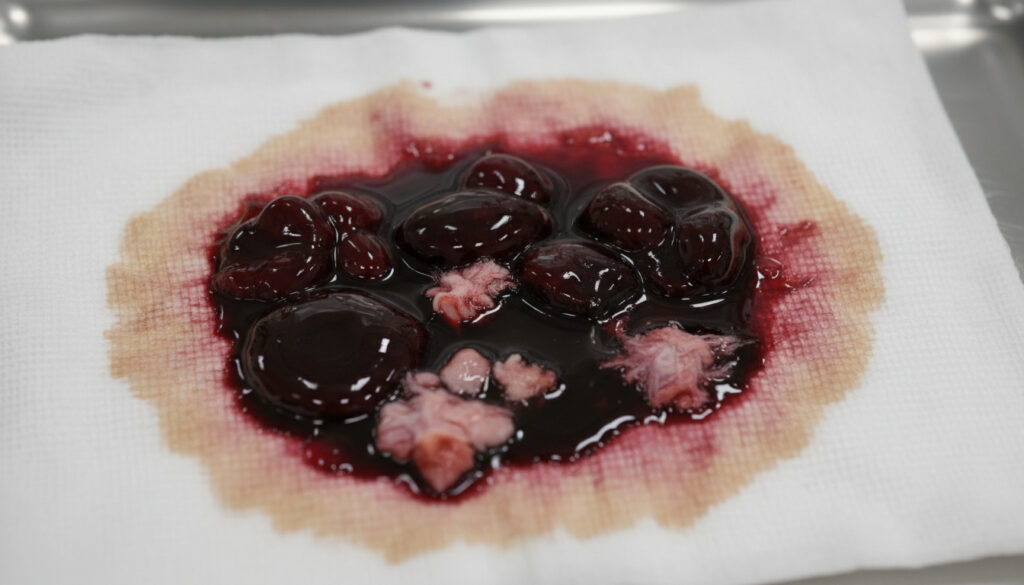
What Does a Miscarriage Look Like – Bleeding, Clots, Tissue Guide
Vaginal bleeding during early pregnancy triggers immediate concern. While light spotting affects many women in the first trimester and often resolves without complications, heavier bleeding accompanied by pain may indicate pregnancy loss. Understanding the visual characteristics of blood, clots, and tissue helps distinguish between normal pregnancy symptoms and potential miscarriage.
Miscarriage, defined as spontaneous pregnancy loss before 20 weeks gestation, occurs in approximately 10 to 20 percent of known pregnancies. Most happen within the first 12 weeks, presenting with specific patterns of bleeding, clotting, and cramping that intensify over time and differ significantly from menstrual periods.
Medical guidance emphasizes that any bleeding during pregnancy requires professional evaluation. The color, volume, and duration of blood loss provide crucial diagnostic information for healthcare providers determining whether a pregnancy continues normally or ends.
What Does Miscarriage Bleeding Look Like?
10-20% of known pregnancies end in miscarriage
Most occur during the first trimester (up to 12 weeks)
Bright red blood often containing clots or tissue
Seek care if soaking more than one pad hourly
- Bleeding color progresses from pink or brown to bright or dark red
- Clots often reach lemon-size, significantly larger than menstrual clots
- Flow intensity typically exceeds normal menstruation
- Approximately half of early bleeding episodes do not end in miscarriage
- Pain usually intensifies as bleeding progresses and the cervix dilates
- Tissue passage becomes more visible after six weeks gestation
- Duration varies from acute heavy bleeding to prolonged spotting over weeks
Bleeding characteristics vary significantly by gestational age and individual physiology. Healthline notes that miscarriage blood ranges from pink to dark red or brown, often resembling coffee grounds, while the amount progresses from light spotting to flow heavier than normal menstruation, potentially including a sudden gush of fluid.
| Symptom | Appearance | Typical Progression |
|---|---|---|
| Bleeding Color | Pink to bright or dark red; brown coffee-grounds discharge | Starts light, intensifies over hours to days |
| Flow Volume | Spotting to heavy gushing; soaking multiple pads | Peaks at 3-5 hours, then gradually lightens |
| Clot Size | Small fragments to lemon-sized masses | Larger clots indicate later gestational age |
| Tissue Characteristics | Stringy bits, sac-like material, or fetal tissue | More distinguishable after 8 weeks |
| Cramping Pattern | Waves of abdominal and lower back pain | Increases in frequency and intensity |
| Duration of Heavy Bleeding | Continuous flow with clots | 3-5 hours typically, up to several days |
| Post-Bleeding Spotting | Light pink or brown residue | Continues 1-2 weeks, possibly up to 4-6 weeks |
| Associated Fluids | Clear or pinkish gush of amniotic fluid | May precede tissue passage |
What Are the Common Signs and Symptoms of Miscarriage?
Is Miscarriage Painful?
Cramping typically begins similarly to menstrual discomfort but escalates significantly within hours. Women often describe radiating waves through the lower abdomen and back, growing stronger as the cervix dilates to pass tissue. Tommy’s Organization describes these waves as consistently stronger than menstrual cramps, sometimes manifesting as true contractions occurring every 5 to 20 minutes during active miscarriage.
Back pain frequently accompanies abdominal cramping, creating a distinctive pattern that distinguishes miscarriage from routine pregnancy discomfort. The intensity correlates with cervical dilation and gestational age, with later first-trimester losses typically causing more severe pain.
What Does an Early Miscarriage Look Like?
Before six weeks gestation, miscarriage often resembles a heavy menstrual period with small clots and minimal distinguishable tissue. American Pregnancy Association explains that between 6 and 12 weeks, the passage of tissue becomes more noticeable, potentially including visible gestational sac material or embryonic tissue.
At eight weeks specifically, symptoms often include the sudden disappearance of pregnancy signs such as breast tenderness and nausea, combined with bleeding and cramping. The passed tissue at this stage may measure approximately 1.6 centimeters, though it often appears fragmented rather than as an intact fetus.
Managing miscarriage pain requires medical supervision rather than standard over-the-counter protocols. While some women research whether Can You Take Ibuprofen and Paracetamol Together – Safety Dosage and Guidelines applies to their situation, pregnancy complications alter typical safety parameters. NSAIDs may be contraindicated during pregnancy concerns, making provider consultation essential before taking any medication.
How Much Bleeding Occurs and When Should You Seek Emergency Care?
Does Miscarriage Always Involve Heavy Bleeding?
Not all miscarriages present with dramatic blood loss. Pregnancy, Birth and Baby explains that threatened miscarriages involve bleeding with cramping while the cervix remains closed, potentially resolving with continued pregnancy. However, inevitable or incomplete miscarriages typically feature progressive bleeding that soaks through two or more pads per hour.
When Should You Go to the ER for Miscarriage Bleeding?
Immediate emergency care becomes necessary when bleeding saturates two pads hourly for over two hours, or when lemon-sized clots persist longer than two hours. Oula Health lists additional critical indicators including severe pain unrelieved by medication, fever exceeding 100.4°F, dizziness, fainting, or foul-smelling discharge.
Ectopic pregnancy symptoms require particular vigilance. Medical authorities warn that one-sided abdominal pain, shoulder tip pain, or discomfort during urination or defecation between 4 and 12 weeks may indicate a life-threatening tubal pregnancy requiring immediate surgical intervention rather than standard miscarriage management.
How Long Does a Miscarriage Last and What Happens During Different Stages?
Can You See the Fetus During Miscarriage?
Visibility depends entirely on gestational age. Before six weeks, passed material appears as small, fluid-filled sacs without distinguishable embryonic features. Miscarriage Association UK notes that after eight weeks, tissue may include recognizable embryonic material alongside the gestational sac, though the appearance varies based on how complete the passage proves.
What Are the Symptoms of Miscarriage at 8 Weeks?
At eight weeks gestation, women typically experience bright red bleeding with lemon-sized clots, intense cramping waves, and potentially visible tissue passage. UC Davis Health indicates that sudden loss of pregnancy symptoms—particularly disappearing nausea and breast tenderness—frequently accompanies the physical bleeding at this stage.
Heavy bleeding typically peaks within three to five hours, then transitions to lighter flow lasting one to two weeks. Some women experience intermittent spotting for up to four to six weeks post-miscarriage. Monitoring for infection signs—including fever, chills, or unusual odor—remains essential during this recovery period.
Reproductive health specialists distinguish implantation bleeding—occurring six to twelve days post-ovulation with light pink or brown spotting, no clots, and minimal cramping—from miscarriage, which involves moderate to heavy bright red flow, visible tissue, and intensifying pain lasting several days.
How Long Does Miscarriage Bleeding Last?
- Initial Onset: Light spotting or brown discharge may occur hours to days before active bleeding begins.
- Escalation Phase: Flow intensifies rapidly, with heavy bleeding peaking within 3 to 5 hours.
- Tissue Passage: Clots and tissue expulsion occurs during peak bleeding, timing variable by individual.
- Resolution Phase: Heavy bleeding subsides to light flow continuing for 1 to 2 weeks.
- Recovery Period: Intermittent spotting may persist for up to 4 to 6 weeks as the body completes the process.
Heavy bleeding typically peaks for three to five hours, with lighter bleeding continuing for one to two weeks or up to four to six weeks post-miscarriage.
Is It a Miscarriage or Something Else?
| Established Indicators | Uncertain Situations Requiring Evaluation |
|---|---|
| Vaginal bleeding combined with worsening cramps and back pain | Light spotting without pain may resolve with continued pregnancy |
| Passage of tissue or clots larger than lemons | Brown discharge alone sometimes indicates old blood rather than active loss |
| Open cervix with heavy bleeding confirms inevitable miscarriage | Cramping without bleeding could indicate other complications |
| Sudden loss of pregnancy symptoms accompanies many losses | Absence of tissue passage leaves diagnosis unclear without ultrasound |
| Contractions occurring every 5-20 minutes during tissue passage | Threatened miscarriage with closed cervix may still resolve normally |
What Causes Miscarriage and Who Is at Risk?
Most first-trimester miscarriages result from chromosomal abnormalities in the embryo, typically random genetic errors unrelated to maternal behavior or lifestyle choices. Risk factors increase with maternal age, particularly after 35, though women of all ages experience pregnancy loss. Previous miscarriage, certain chronic conditions, and uterine structural abnormalities also elevate risk statistics.
Light bleeding in early pregnancy proves surprisingly common, occurring in many pregnancies during the first 12 weeks. Approximately half of women who experience early bleeding continue to deliver healthy infants, highlighting why medical evaluation proves essential rather than assuming the worst based on symptoms alone.
What Do Medical Authorities Say About Miscarriage Recognition?
Contact a doctor, midwife, GP, or emergency services immediately for any pregnancy bleeding, as it may not always indicate miscarriage but requires evaluation.
Pregnancy, Birth and Baby
Light bleeding alone in early pregnancy is common and not always miscarriage-related.
UC Davis Health
What Should You Remember About Miscarriage Symptoms?
Miscarriage typically presents with vaginal bleeding ranging from pink to dark red, often containing clots larger than menstrual periods, accompanied by intensifying cramps and potential tissue passage. While heavy bleeding alarms most women, the volume varies significantly by gestational age and individual circumstances. Any bleeding during pregnancy necessitates immediate medical evaluation to determine whether the pregnancy continues. For context on managing severe pain, reviewing Can I Take 600 mg of Ibuprofen Every 4 Hours – Safe Dosage Limits illustrates why standard dosing protocols require physician adjustment during pregnancy complications.
Frequently Asked Questions
What color is miscarriage blood?
Miscarriage blood varies from pink to bright or dark red, often including brown discharge resembling coffee grounds. The color typically progresses from lighter to darker as bleeding continues.
Does miscarriage blood have clots?
Yes, clots are common and often larger than those during menstruation, sometimes reaching lemon-size. Stringy tissue or fetal material may accompany these clots, particularly after six weeks gestation.
What does miscarriage tissue look like?
Before six weeks, tissue appears as small fluid-filled sacs. After eight weeks, material may include recognizable embryonic tissue or placental fragments, often appearing grayish or pinkish and measuring up to several centimeters.
Can you have a miscarriage without heavy bleeding?
Yes. Threatened miscarriages may present only light spotting with a closed cervix. Some losses, called missed miscarriages, occur without immediate bleeding, requiring medical intervention to complete the process.
How do doctors confirm a miscarriage has completed?
Physicians use ultrasound imaging to verify that all tissue has passed and monitor declining hCG hormone levels in blood tests. Physical examination of the cervix also helps determine whether the miscarriage remains incomplete.
Will a pregnancy test show negative during miscarriage?
Not immediately. Pregnancy tests may remain positive for days or weeks after tissue passes because hCG hormone levels decline gradually rather than disappearing instantly. Medical follow-up confirms when levels return to non-pregnant ranges.
Is white-pink mucus discharge a sign of miscarriage?
White-pink mucus discharge can accompany miscarriage symptoms, particularly when mixed with blood. However, this discharge alone does not confirm pregnancy loss and requires evaluation alongside other symptoms.
More related posts
 Pubs Near Me Now – Find Open Pubs in Walking Distance
 Stuart Broad – Wife, Net Worth, Career Stats and Ashes Legacy
 Late Night Pharmacy Near Me – Find NHS and Boots Options Open Now
 Ryan Air Carry On Bag Size – Exact 2025 Dimensions and Rules
 France PM – Shortest Tenure in Fifth Republic History
 When Does the Transfer Window Open – Premier League 2026 Dates
 Mac DeMarco – Complete Biography, Age, Genre and Net Worth