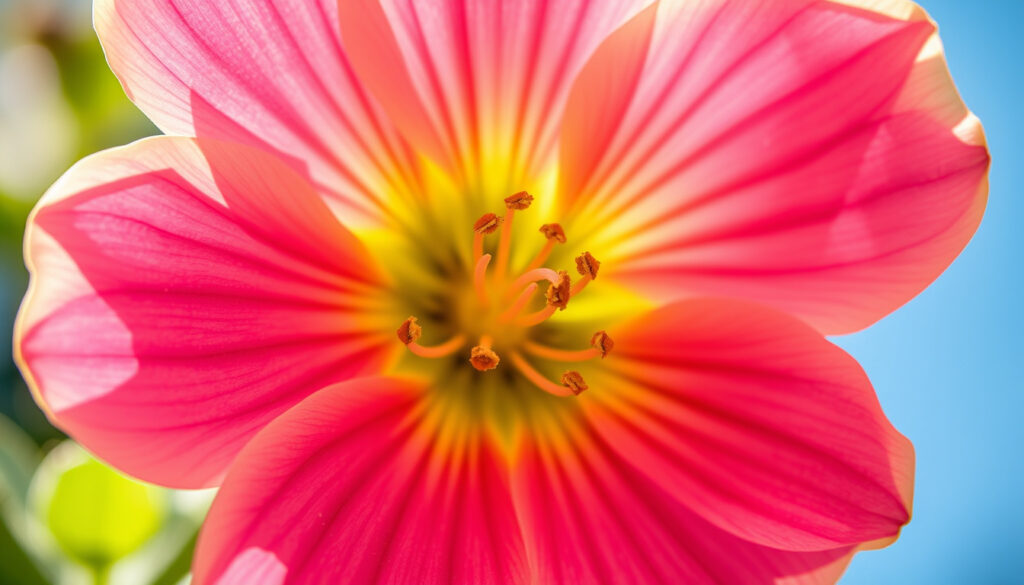
Parts of a Flower – Diagram Functions and Guide for Kids
A flower consists of four main anatomical structures: sepals, petals, stamen, and pistil. Each component plays a distinct role in reproduction, from protecting the developing bud to facilitating pollination and seed formation.
Flowers represent the reproductive systems of angiosperm plants, the largest group of flowering plants on Earth. Understanding these structures reveals how plants ensure their survival through complex biological mechanisms that have evolved over millions of years. Whether examining a simple daisy or an elaborate orchid, the fundamental architecture remains remarkably consistent across species.
What Are the Parts of a Flower and Their Functions?
The anatomy of a flower divides into several key components, each serving essential roles in the plant’s life cycle. These structures work together seamlessly to enable reproduction and seed production.
- Male Parts (Stamen) – Produces and disperses pollen grains containing male reproductive cells
- Female Parts (Pistil) – Receives pollen and contains the ovary where seeds develop
- Protective Parts (Sepals) – Shield the delicate bud before it opens
- Attracting Parts (Petals) – Use colour and scent to draw pollinators
Flowers classified as “complete” contain both male and female reproductive organs, while “incomplete” flowers lack one or more of these structures. This variation occurs naturally across different plant families and species.
- Pollination transfers pollen from the stamen’s anther to the pistil’s stigma, initiating fertilisation
- Petals form the corolla, while sepals collectively create the calyx that protects unopened buds
- The receptacle anchors all floral organs and connects the flower to the peduncle (stem)
- Water and nutrients travel through the peduncle to sustain the flower during its reproductive phase
- Ovules within the ovary develop into seeds after successful fertilisation
- Anthers typically display yellow colouring and release powdery pollen grains visible to the naked eye
| Part | Primary Function |
|---|---|
| Sepal | Protects the developing flower bud |
| Petal | Attracts pollinators through colour and scent |
| Stamen (Anther + Filament) | Produces and releases pollen grains |
| Pistil (Stigma + Style + Ovary) | Receives pollen and houses developing seeds |
| Receptacle | Supports and connects all flower parts |
| Peduncle | Transports water and nutrients to the flower |
| Anther | Pollen sac that produces male reproductive cells |
| Filament | Stalk that elevates the anther for pollen dispersal |
These eight structures represent the core components found in most flowering plants. According to Encyclopaedia Britannica, angiosperms display remarkable diversity in size, shape, and arrangement of these parts while maintaining this fundamental anatomical plan.
Parts of a Flower Diagram
Understanding the Spatial Arrangement
Visual learners benefit from understanding how flower parts relate spatially. When observing a flower from outside inward, the structures layer systematically from protection to reproduction.
The peduncle forms the foundation, attaching the flower to the plant’s main stem. The receptacle sits atop this stalk, providing a platform for all other components. Sepals encircle the base in green, leaf-like formations that resemble protective scales around an unopened bud.
Petals surround the reproductive organs, typically displaying vibrant colours that catch the attention of bees, butterflies, and other pollinators. These structures often contain scent glands and nectar stores that further encourage visits from pollinating insects.
When creating or interpreting a flower diagram, work from outside to inside: begin with the peduncle and receptacle at the base, add sepals, arrange petals in a ring, position stamens around the perimeter, and place the pistil at the centre. This layered approach mirrors how the structures develop biologically.
Cross-Section View Reveals Internal Details
A cross-sectional diagram exposes the internal anatomy often hidden from casual observation. The style connects the sticky stigma to the hollow ovary below, where ovules waiting for fertilisation reside.
Cross-sections prove particularly valuable for understanding how pollen travels through the pistil. The style contains a specialised canal that guides pollen tubes toward the ovary, enabling the fusion of male and female reproductive cells.
Botanical resources such as Kew’s educational materials provide detailed diagrams showing these internal pathways and the precise mechanics of fertilisation within the ovary.
Parts of a Flower for Kids
Simple Explanations Using Everyday Comparisons
Explaining flower anatomy to children works best when comparing plant structures to familiar concepts. The sepals function like a cozy blanket wrapped around a sleeping flower, keeping it safe before the petals unfurl.
Petals act as colourful signs advertising the flower’s location. Just as a restaurant uses bright signage to attract customers, petals signal to bees and butterflies that nectar and pollen await inside.
The stamen functions as the flower’s male team member, responsible for producing pollen. The anther resembles a tiny yellow dust bag, while the filament acts as a tiny pole holding that dust bag high where pollinators can brush against it.
Dissecting a lily or tulip provides a hands-on learning experience. Carefully peel away the petals, locate the dusty anthers, and identify the central pistil structure. Examining a real flower reinforces textbook knowledge in a memorable way that appeals to curious young minds.
The Female Parts Explained Simply
The pistil represents the flower’s female component. Its stigma acts like a sticky trap at the top, designed to catch pollen grains carried by visiting insects. Children can imagine the stigma as a flypaper strip waiting for passing pollen.
The style functions as a thin tunnel connecting the sticky stigma to the ovules waiting below. Pollen tubes grow down through this tunnel, delivering male cells to fertilise the waiting ovules.
The ovary houses the future seeds in a protective chamber. After pollen reaches the stigma and travels through the style, it finally reaches the ovules inside the ovary, where fertilisation occurs and seeds begin to form.
Interactive worksheets available through free educational resources combine labelling activities with colouring exercises to reinforce these concepts for elementary-aged students.
Male and Female Parts of a Flower
The Stamen: Male Reproductive Anatomy
The stamen consists of two distinct structures: the anther and filament. These components work together to produce and disseminate pollen, the microscopic male reproductive cells necessary for plant fertilisation.
The anther develops within specialized chambers called pollen sacs. As these sacs mature, they split open and release pollen grains that vary dramatically in shape, size, and surface texture depending on the plant species. Wind-pollinated plants typically produce lightweight, smooth pollen, while insect-pollinated species often develop textured grains that adhere more easily to pollinator bodies.
The filament provides structural support, elevating the anther to a position where pollinators are most likely to contact it. This positioning represents an evolutionary adaptation that maximises pollen transfer efficiency.
Research published by Botany One documents how stamen number varies considerably across species, with some flowers containing dozens of these male organs arranged in concentric rings.
The Pistil: Female Reproductive Anatomy
The pistil, also called the carpel, represents the female reproductive organ. It comprises three integrated structures: stigma, style, and ovary. Each component fulfills a specific stage of the fertilisation process.
The stigma presents the first point of contact for incoming pollen. Its surface texture, whether feathery, lobed, or capitate, reflects the pollination mechanism of each species. Wind-pollinated flowers typically feature large, feathery stigmas that maximize pollen capture from air currents.
The style extends upward from the stigma, creating a pathway toward the ovary. Within this structure, a specialized transmitting tissue guides the growing pollen tube downward, ensuring it reaches the ovules positioned within the ovary.
Not all flowers contain both male and female parts. Plants with separate male and female flowers on the same individual are called monoecious, while species with male and female flowers on different plants are termed dioecious. This variation significantly affects how pollination must occur for seed production to succeed.
How the Parts Work Together
Pollination begins when a pollinator—insect, bird, wind, or water—carries pollen from an anther to a stigma. This transfer can occur within the same flower (self-pollination) or between flowers on different plants (cross-pollination).
Upon landing on a compatible stigma, the pollen grain germinates, producing a pollen tube that grows down through the style toward the ovary. Sperm cells travel within this tube until they reach the ovules, where fertilisation occurs and the process of seed development begins.
The Royal Horticultural Society provides curriculum-aligned resources demonstrating these processes with detailed cross-sections showing each developmental stage.
What Scientists Have Established and What Remains Unclear
The fundamental anatomy of flowers—sepals, petals, stamens, and pistils—represents well-established scientific knowledge supported by centuries of botanical research. These structures occur universally across angiosperms, though their specific forms and arrangements vary considerably between species.
Scientists understand the basic mechanics of pollen production, transport, and fertilisation in considerable detail. Molecular biologists continue investigating the precise genetic and hormonal mechanisms that control the development of each floral structure from undifferentiated tissue.
Areas of ongoing research include the complex chemical signalling between flowers and their pollinators, the evolutionary origins of specific structural adaptations, and the genetic basis for variation in floral architecture across different plant lineages.
Why Flower Anatomy Matters
Understanding flower structure provides insight into how plants reproduce and interact with their environment. Every petal colour, every scent molecule, and every pollen grain represents an evolutionary solution to the challenge of ensuring reproduction.
For gardeners and farmers, knowledge of flower anatomy informs cultivation practices, pollination management, and breeding programs. Successful fruit production depends on understanding whether a plant requires cross-pollination or can self-fertilise.
Plant scientists apply this anatomical knowledge to develop disease-resistant varieties, improve crop yields, and conserve endangered species. The principles discovered through studying flower structure apply directly to addressing global food security challenges.
Reliable Sources for Further Study
Several authoritative resources provide additional information on flower anatomy and plant reproduction. The Royal Horticultural Society maintains curriculum-linked materials suitable for educators and students exploring these topics.
Flowers represent the most complex structures in the plant kingdom, combining protective, reproductive, and attractive functions within a single organ system.
— Royal Horticultural Society, School Gardening Resources
Encyclopaedia Britannica offers comprehensive coverage of angiosperm biology, while Kew Gardens provides botanical resources documenting the incredible diversity of floral structures across plant families.
These institutional sources ensure accuracy and provide gateways to deeper exploration of plant science for those wishing to expand their understanding beyond this overview.
Summary
Flowers consist of four primary anatomical regions: protective sepals, attractive petals, male reproductive stamens, and female reproductive pistils. These structures work together through pollination and fertilisation to enable seed production and plant reproduction. The stamen produces pollen containing male cells, while the pistil receives this pollen through its stigma, guides it through the style, and nurtures developing seeds within the ovary. Supporting structures like the receptacle and peduncle anchor and sustain the flower throughout its reproductive cycle. Understanding these components provides fundamental insight into how flowering plants survive and propagate across diverse environments.
What is the simplest way to explain parts of a flower?
Describe each part using everyday comparisons: sepals as protective blankets, petals as colourful signs, stamens as pollen factories, and the pistil as the seed-making centre.
What are the female parts of a flower?
The pistil, also called the carpel, constitutes the female reproductive organ. It includes the stigma (sticky top), style (connecting tube), and ovary (seed container).
How do petals and sepals differ?
Petals are typically colourful and attract pollinators, while sepals are usually green and protective, encasing the bud before the flower opens.
What is the male part of a flower?
The stamen is the male reproductive structure, consisting of the anther (which produces pollen) and the filament (which supports and elevates the anther).
Why is the pistil considered the most important part?
The pistil contains the ovary where seeds develop after fertilisation. Without successful seed production, the plant cannot reproduce, making this structure essential to the plant’s life cycle.
Can flowers function without all four main parts?
Some flowers lack certain parts and are called “incomplete.” These flowers may still reproduce, but typically require pollination from other complete flowers nearby.
What role do pollinators play in flower reproduction?
Pollinators transfer pollen from the stamen’s anther to the pistil’s stigma. This transfer enables fertilisation and subsequent seed development within the ovary.
Where can I find reliable diagrams of flower parts?
Educational resources from the Royal Horticultural Society and Kew Gardens provide accurate, curriculum-aligned diagrams suitable for students and educators exploring flower anatomy.
More related posts
 Heart Rate – Normal Ranges, Danger Levels, and Target Zones
 Tyger Drew-Honey – Biography, Family and Career Facts
 Howard Charles – Actor Biography, Career and Private Life Facts
 Wynne Evans – Strictly 2024, Career & Controversy
 Best Bean to Cup Coffee Machine – Expert Guide for UK Buyers
 Bodies Everest – Why frozen corpses stay on the mountain
 Zak Crawley – Dropped by England, Takes Break from First-Class
 Dennis Quaid – Biography, Movies, Net Worth and Family