Florence Nightingale – Biography, Theory and Lasting Legacy
Florence Nightingale (1820–1910) was a British nurse, statistician, and social reformer who laid the foundation for modern nursing. Known worldwide as the “Lady with the Lamp”, she transformed battlefield medicine during the Crimean War and later used data to drive sweeping healthcare reforms. Her environmental theory of health remains a core principle of nursing education today.
Born into wealth and educated in languages, mathematics, and philosophy, Nightingale rejected the expected path of marriage and domestic life. Instead, she pursued what she described as a divine calling to care for the sick. That decision would change the course of medical history.
Her legacy extends far beyond the battlefield. Nightingale was a pioneering statistician who invented new ways to visualize data, a prolific writer who produced over 200 books and reports, and a determined reformer who convinced the British government to overhaul military medicine. She achieved all of this in an era when women were rarely permitted to work in science or public life.
Who Was Florence Nightingale? A Brief Summary
Florence Nightingale is best understood as a reformer who used evidence, hygiene, and compassion to remake healthcare. Her life and work can be captured in four essential facts.
Nightingale was far more than a caretaker. She was a rigorous data analyst who understood that clean wards, fresh air, and proper nutrition saved more lives than any medicine available at the time. Her methods were so effective that they reshaped hospitals across the British Empire and beyond.
Key Insights at a Glance
- Florence Nightingale was more than a nurse; she was a rigorous statistician who used data to drive hospital reform.
- Her ‘Environmental Theory’ remains a core principle of modern nursing practice.
- Despite being famous as a nurse, she famously refused marriage to dedicate her life to reform.
- ‘Florence Nightingale Syndrome’ is a modern, non-clinical term not historically associated with her, illustrating a common internet misconception.
- She reduced the mortality rate at Scutari hospital from roughly 40% to 2% in six months through sanitation reforms alone.
Key Facts About Florence Nightingale
| Category | Detail |
|---|---|
| Name | Florence Nightingale |
| Birth | 12 May 1820, Florence, Grand Duchy of Tuscany |
| Death | 13 August 1910, Mayfair, London, England |
| Occupation | Social reformer, Statistician, Founder of modern nursing |
| Major Work | Notes on Nursing (1859) |
| Nickname | The Lady with the Lamp |
| Awards | Royal Red Cross (1883) |
What Is Florence Nightingale Best Known For? The Lady with the Lamp
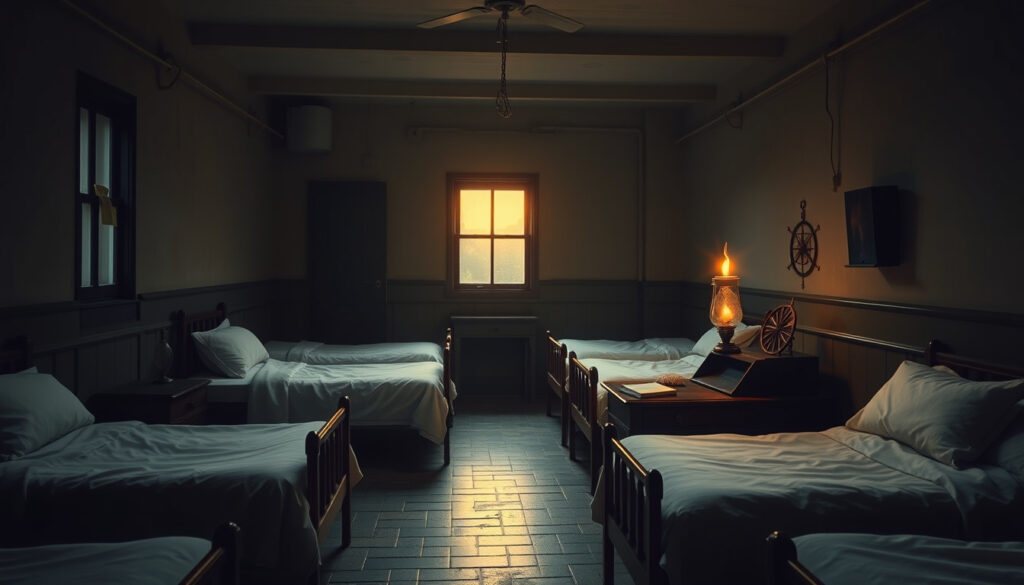
The image of Nightingale moving through dark hospital wards with a lantern is one of the most enduring symbols of compassion in modern history. But the reality behind the nickname is even more remarkable than the myth.
The Crimean War Mission
In November 1854, British Secretary of War Sidney Herbert asked Nightingale to lead a team of 38 nurses to the military hospital at Scutari, near Constantinople. What they found was catastrophic. Injured soldiers lay on dirty floors, medical supplies were almost nonexistent, and hygiene was so poor that disease spread faster than battle wounds could arrive (Women’s History).
Of every 1,000 injured soldiers, roughly 600 were dying — not from their injuries, but from communicable diseases such as typhus, cholera, and dysentery (PMC). The hospital itself was built over a sewer, and the water supply was contaminated.
Night Rounds and the Lamp
Nightingale began making rounds after dark, carrying a Turkish lantern to check on wounded soldiers. She offered not only medical care but also psychological comfort, writing letters home for men who could not write and sitting with the dying. Soldiers began calling her the “Lady with the Lamp”, a phrase later immortalized in a poem by Henry Wadsworth Longfellow.
Dramatic Drop in Mortality
Within six months of implementing basic sanitation measures — cleaning wards, clearing drains, providing clean water, nutritious food, and proper medical equipment — the death rate plummeted from around 40% to just 2.2% (Britannica). It was one of the most dramatic public health turnarounds in military history.
What Is the Florence Nightingale Theory of Nursing?
Nightingale’s approach to patient care is formally known as the Environmental Theory. It holds that the physical environment — clean air, pure water, proper drainage, adequate light, and warmth — is the primary factor in preventing disease and supporting recovery.
Nightingale wrote, “If a patient is cold, if a patient is feverish, if a patient is faint, if he is sick after taking food, if he has a bed-sore, it is generally not the disease but the nursing.” She believed that a nurse’s primary duty was to manipulate the environment to allow nature to heal the patient.
Sanitation and Hand Hygiene
Nightingale mandated frequent hand washing, ordered every room in the Scutari hospital to be scrubbed clean, and paid workers out of her own pocket to clear blocked drains and remove waste (British Red Cross). These measures, which seem obvious today, were revolutionary in the 1850s.
Ventilation, Light, and Nutrition
She designed hospital wards with full-height windows to maximize fresh air and natural light, believing that stagnant air was a primary source of disease. She also established a hospital kitchen to provide nutritious food for patients and purchased essential medical equipment using funds from home (National Geographic Kids).
Lasting Influence on Modern Nursing
The Environmental Theory is still taught in nursing schools worldwide. It laid the groundwork for modern infection control protocols, hospital architecture that prioritizes light and airflow, and the entire field of public health nursing. Every hand-washing station in a hospital today traces back to Nightingale’s insistence on cleanliness. This approach to infection control remains central to healthcare practice.
Did Florence Nightingale Have a Husband? Personal Life and Death
Nightingale never married. She received at least one serious proposal — from Richard Monckton Milnes, a wealthy and intellectual suitor — but she refused him. She later wrote in her private notes that marriage would have interfered with her divine calling to serve the sick and reform healthcare.
A persistent internet rumor claims that Nightingale had a secret husband or child. There is zero historical evidence for this claim. Her personal diaries, letters, and the accounts of those who knew her all confirm that she remained single and childless by deliberate choice.
How Did Florence Nightingale Die?
Nightingale died peacefully on 13 August 1910 at her home in Mayfair, London, at the age of 90. The cause of death was primarily old age, though she had been blind and bedridden for many years prior. She was offered a burial in Westminster Abbey, but her family declined, and she was laid to rest in St. Margaret’s Churchyard in East Wellow, Hampshire (Wikipedia).
Why Did She Refuse Marriage?
Nightingale’s decision was not a rejection of love but an affirmation of purpose. She wrote in her diary that she needed “moral and physical freedom” to do her work. She believed that marriage, for a woman of her era, would mean surrendering control over her time, her finances, and her mission. That was a price she was unwilling to pay.
What Is ‘Florence Nightingale Syndrome’? Clarifying a Misunderstood Term
The term “Florence Nightingale Syndrome” appears frequently in online discussions, but it has no basis in her life or in medical literature. It is a modern pop-culture concept, often used in anime, gaming, and fan fiction, to describe a situation in which a caregiver develops romantic feelings for a patient.
Historical records contain no mention of Nightingale ever using the term or experiencing such a dynamic. She maintained strictly professional relationships with her patients. The syndrome is a fictional trope, not a real diagnosis, and should not be confused with her actual legacy.
Timeline: Key Events in the Life of Florence Nightingale
- 1820 — Born in Florence, Italy.
- 1837 — Experienced a ‘calling’ from God to serve mankind.
- 1850 — Began training as a nurse in Germany at the Kaiserwerth Deaconesses’ Institute.
- 1854 — Appointed to lead nurses at Scutari military hospital during the Crimean War.
- 1859 — Published ‘Notes on Nursing’, still in print today.
- 1860 — Established the Nightingale Training School for Nurses at St. Thomas’ Hospital in London.
- 1907 — Became the first woman to receive the Order of Merit.
- 1910 — Died at the age of 90 in London.
What Do We Know for Certain About Florence Nightingale?
Separating established historical fact from modern myth is essential for understanding Nightingale’s true legacy. The table below summarizes what historians agree on and what remains uncertain or misattributed.
| Established Information | Information That Remains Unclear |
|---|---|
| She was born on 12 May 1820 in Florence, Italy, to a wealthy British family. | The exact nature of her teenage “calling” is described only in her private spiritual writings. |
| She reduced the mortality rate at Scutari from ~40% to ~2% through sanitation reforms. | Some historians debate whether the drop was also influenced by a change in the type of patients arriving. |
| She never married and had no children, by deliberate choice. | No personal letters exist that fully explain her refusal of Richard Monckton Milnes. |
| She was a pioneering statistician and the first woman elected to the Royal Statistical Society. | The exact date of her election is sometimes misreported; records confirm 1858. |
| ‘Florence Nightingale Syndrome’ is a modern pop-culture term with no historical basis. | Its first appearance in print or online has not been definitively traced. |
Context: The Broader Impact of Her Work
Nightingale’s influence extended far beyond the walls of the Scutari hospital. After the Crimean War, she used the mortality data she had collected to convince Queen Victoria and Prince Albert to establish a Royal Commission on the Health of the British Army. The commission’s recommendations led to sweeping reforms in military barracks, hospital design, and medical supply chains.
She is credited with creating one of the earliest versions of the pie chart — which she called a “coxcomb” diagram — to persuade policymakers that most soldier deaths were caused by preventable diseases, not battle wounds. Her visual arguments were so clear that they sparked immediate legislative action. The same source at Women’s History documents this innovation.
Her work also shaped the broader Victorian reform movement, which sought to apply scientific principles to social problems. Nightingale corresponded with leading reformers, wrote extensively on hospital design, and mentored a generation of nurses who carried her methods across the British Empire and to the United States. The British Red Cross has explicitly stated that her legacy informed their mission.
Sources and Key Quotes
Nightingale’s own words offer the clearest window into her thinking. Below are two of her most frequently cited statements, drawn from her published writings and attributed remarks.
“I attribute my success to this: I never gave or took any excuse.”
— Florence Nightingale (attributed)
“If a patient is cold, if a patient is feverish, if a patient is faint, if he is sick after taking food, if he has a bed-sore, it is generally not the disease but the nursing.”
— Notes on Nursing, 1859
High-authority sources used in this article include the official Wikipedia entry, the Britannica biography, the National Army Museum, the British Red Cross, and the peer-reviewed medical literature available via PMC.
Legacy: The Future of Nightingale’s Vision
Nightingale’s environmental theory directly influences modern infection control protocols, hospital architecture, and public health data tracking. Her insistence on measuring outcomes and letting evidence guide practice laid the foundation for evidence-based medicine. Every nurse who washes their hands before seeing a patient, every hospital designed with natural light and ventilation, and every public health official who uses data to drive policy is building on the legacy of the woman with the lamp. Her work also connects to broader Victorian-era healthcare reforms that reshaped how societies think about sanitation, poverty, and disease.
Frequently Asked Questions
What books did Florence Nightingale write?
Her most famous work is ‘Notes on Nursing: What It Is and What It Is Not’ (1859). She also wrote ‘Notes on Hospitals’ (1859) and over 200 books, pamphlets, and reports on nursing, statistics, and social reform.
How did Florence Nightingale die?
Florence Nightingale died peacefully on 13 August 1910 at her home in Mayfair, London, at the age of 90. The cause of death was primarily old age, though she had been blind and bedridden for many years prior.
Why is she called ‘The Lady with the Lamp’?
The nickname was given to her by soldiers during the Crimean War. She would make rounds at night to check on wounded soldiers, carrying a Turkish lantern. The phrase was popularized in a poem by Henry Wadsworth Longfellow.
Is Florence Nightingale related to the Red Cross?
While she did not found the Red Cross, her work and advocacy for sanitary reform and nursing standards had a significant influence on the organization. The British Red Cross explicitly states her legacy informed their mission.
What is the Environmental Theory of nursing?
It is the theory that a clean environment — fresh air, pure water, proper drainage, warmth, and quiet — is essential for healing. Nightingale argued that the environment, not medicine alone, is the primary factor in recovery.
Did Florence Nightingale have children?
No. She never married and had no children. She rejected a proposal from Richard Monckton Milnes because she believed marriage would prevent her from pursuing her calling to nursing and reform.
What was Nightingale’s role in statistics?
She was a pioneering statistician who collected mortality data during the Crimean War, created one of the first pie charts (the “coxcomb” diagram), and became the first woman elected to the Royal Statistical Society in 1858.
Is ‘Florence Nightingale Syndrome’ a real diagnosis?
No. It is a modern pop-culture term used in anime, gaming, and fiction. It describes a caregiver developing feelings for a patient, but it has no basis in medical literature or in Nightingale’s actual life.
Where was Florence Nightingale born?
She was born on 12 May 1820 in Florence, Italy, to a wealthy British family. She was named after the city of her birth.
What is Nightingale’s most important legacy?
She founded the first scientifically based nursing school at St. Thomas’ Hospital in London in 1860, established the principles of modern sanitation in healthcare, and pioneered the use of data to drive medical reform.
More related posts
 Todd Grimshaw – Coronation Street Character Guide and Actor Story
 Late Night Pharmacy Near Me – Find NHS and Boots Options Open Now
 Steve McFadden – Biography, Age, Family and Net Worth
 Horses Grand National 2026 – Winner, Runners and Predictions
 Sharon Horgan – Biography, Movies, TV Shows & Career
 Richard Ramirez – The Night Stalker’s Life, Crimes and Death
 Karl Bushby – Goliath Expedition route and 2025 update
 How Long Do Blood Test Results Take – NHS Waiting Times Guide