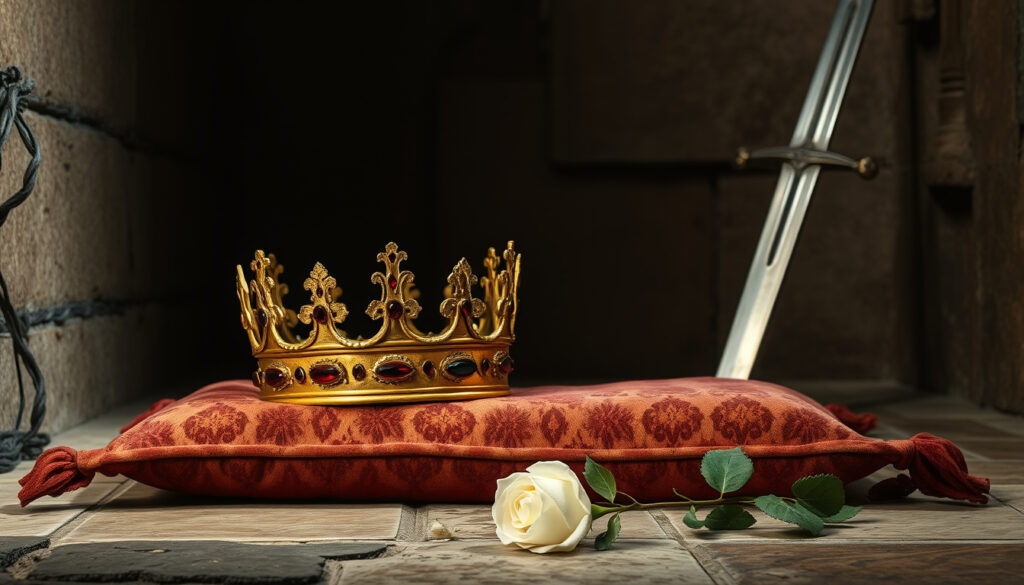
Richard III – The Last Plantagenet King’s True Story
Richard III, the last Plantagenet king of England, died at the Battle of Bosworth in 1485. More than five centuries later, his skeleton was unearthed beneath a Leicester car park, setting off one of the most dramatic archaeological identifications in British history. His story remains a tangle of historical fact, literary embellishment, and unresolved mystery.
For a king who reigned only two years, Richard III has generated an extraordinary amount of discussion. Part of that stems from his sudden, violent death on the battlefield. Part comes from Shakespeare’s enduring portrait of him as a physically deformed and power-hungry villain. And part is rooted in a genuine historical puzzle: what really happened to the Princes in the Tower?
The 2012 discovery of his skeleton changed the conversation. For the first time, science offered direct answers about his appearance, his cause of death, and his final resting place. Yet the deeper questions about his character and his actions remain very much open.
Who Was Richard III? A Quick Biography
Richard III was king of England from 1483 until his death at the Battle of Bosworth Field on 22 August 1485. He was the last English monarch to die in battle and the final ruler of the Plantagenet dynasty, which had held the throne for more than three centuries.
| Born 2 October 1452, Fotheringhay Castle |
Died 22 August 1485, Bosworth Field (aged 32) |
| Reign 26 June 1483 – 22 August 1485 (2 years) |
Key Controversy Alleged murder of the Princes in the Tower |
Key Insights
- Richard III was the last English king to die in battle.
- His skeleton was discovered under a parking lot in Leicester in 2012, confirmed via DNA evidence.
- Shakespeare’s play is largely responsible for his villainous reputation, though historians continue to debate the truth.
- DNA analysis proved he had scoliosis, not a hunchback as popularly depicted.
- His reign of only two years makes it one of the shortest in English history.
- The Battle of Bosworth Field ended the Wars of the Roses and brought the Tudor dynasty to power.
Richard III: Key Facts at a Glance
| Attribute | Detail |
|---|---|
| Full Name | Richard Plantagenet |
| House | York (Plantagenet dynasty) |
| Cause of Death | Killed in action at the Battle of Bosworth Field |
| Height (estimated) | 5 feet 8 inches (approx. 173 cm), based on skeleton |
| Known Children | Edward of Middleham (died young), plus illegitimate children |
| Famous Quote (Shakespeare) | “My kingdom for a horse!” |
| Reign Duration | 26 June 1483 – 22 August 1485 |
| Burial | Originally Grey Friars, Leicester; reburied at Leicester Cathedral in 2015 |
Was Richard III a Good King or a Tyrant?
This question sits at the heart of the Richard III debate. The historical record is fragmentary, and most surviving accounts were written after the Tudor victory, meaning they reflect the views of the dynasty that overthrew him.
What the Contemporary Sources Say
Contemporary writers offered conflicting assessments. The historian John Rous described Richard as “a noble lord” early in his career but later wrote that he became “a cruel tyrant.” Such contradictions are common in medieval chronicles, which were often shaped by political loyalties.
The Tudor Narrative
After Henry Tudor took the throne as Henry VII, the new dynasty had a clear interest in portraying Richard III negatively. The more convincingly Richard could be painted as a usurper and murderer, the stronger Henry’s own claim appeared. This official narrative heavily influenced later historians and, ultimately, Shakespeare.
The Princes in the Tower Question
Richard III remains strongly associated with the disappearance of his nephews, Edward V and Richard of Shrewsbury, the “Princes in the Tower.” The surviving evidence has long been disputed and does not provide a universally accepted resolution. This controversy is one reason Richard III has remained one of the most debated figures in English history, both in scholarship and in popular culture.
No direct evidence has ever been produced proving that Richard III ordered the deaths of the Princes in the Tower. The case against him rests on circumstance and motive, while alternative theories point to Henry VII or others. The question remains open.
How Did Richard III Die and How Was His Skeleton Found?
Death at Bosworth Field
Richard III was killed at the Battle of Bosworth Field on 22 August 1485. The battle marked the decisive conflict of the Wars of the Roses, ending Yorkist rule and allowing Henry Tudor to claim the throne as Henry VII. Richard’s death in combat made him the last English king to die on a battlefield.
Burial and Lost Grave
After his death, Richard III was buried with little ceremony in Leicester, in the church of the Franciscan friars at Grey Friars. When the friary was dissolved during the Reformation, the site was lost. Over the centuries, the exact location of his grave was forgotten.
The 2012 Discovery
In August and September 2012, archaeologists from the University of Leicester began excavating a car park in Leicester that was believed to sit on the site of Grey Friars. They uncovered a male skeleton with battle injuries and a curved spine. The skeleton was found beneath the car park, a discovery that captured worldwide attention.
How the Identification Was Made
In February 2013, the University of Leicester announced that the remains were Richard III’s. The identification was based on multiple lines of evidence: the archaeological context of the Grey Friars site, osteological analysis of the bones, radiocarbon dating, and mitochondrial DNA matching a living maternal-line descendant. The definitive DNA study was published in 2014.
The skeleton belonged to a man aged about 30 to 34. It showed severe scoliosis, a curvature of the spine, rather than a hunchback. The bones also had multiple battle injuries consistent with death in combat, including wounds to the skull and pelvis.
Richard III in Shakespeare and Film
Shakespeare’s Villain
Shakespeare’s play Richard III helped cement Richard’s reputation as a cruel, power-hungry ruler. Modern scholarship has generally treated that depiction as politically shaped rather than as a neutral biography. Shakespeare drew heavily on Tudor-era sources, particularly Thomas More’s History of King Richard III, which was itself shaped by political considerations.
How Accurate Is Shakespeare’s Portrayal?
The historical Richard III bore little physical resemblance to Shakespeare’s character. The real king had scoliosis, which would have made one shoulder slightly higher than the other, but he was not a hunchback. His reign, though brief, saw some notable legal and administrative reforms. Whether he was the calculating villain of the play is a separate historical question that the archaeological evidence cannot answer.
Film Adaptations
The discovery of the skeleton intensified public interest in Richard III and led to renewed attention on film and television portrayals. The most notable recent adaptation was the 2025 film starring Benedict Cumberbatch, who had previously played the role on stage and also participated in the documentary coverage of the discovery.
Shakespeare’s Richard III is a dramatic character, not a historical record. The play was written more than a century after Richard’s death and relied on Tudor-era sources that had a political agenda. The skeleton discovery confirmed some physical details but could not resolve the moral questions about his reign.
Did Richard III Have Children? His Family Legacy
Richard III had one legitimate son, Edward of Middleham, who was created Prince of Wales in 1483. Edward died young, in 1484, at about the age of ten. His death left Richard without a direct heir.
Richard also had several illegitimate children, though the exact number remains unclear. The best-documented is John of Gloucester, who was appointed Captain of Calais. Another, Katherine Plantagenet, married William Herbert, 2nd Earl of Pembroke. The full extent of Richard’s illegitimate offspring is not known with certainty.
With Richard’s death at Bosworth, the Yorkist line lost the throne. Henry Tudor’s victory established the Tudor dynasty, which reshaped later historical memory of Richard III. The Richard III Society continues to research and debate his legacy.
When Did Richard III Live? A Timeline of His Life and Afterlife
- 1452: Richard Plantagenet is born at Fotheringhay Castle.
- 1483: He is crowned King of England after deposing Edward V.
- 1485: He is killed at the Battle of Bosworth Field; Henry Tudor takes the throne as Henry VII. Richard is buried at Grey Friars in Leicester.
- 2012: Archaeologists excavate a car park in Leicester and uncover a skeleton at the presumed site of Grey Friars.
- February 2013: The University of Leicester announces that the remains are Richard III’s, based on archaeological context, bone analysis, radiocarbon dating, and DNA evidence.
- March 2015: Richard III is reburied at Leicester Cathedral.
What Do We Know for Certain About Richard III?
| Established Information | Information That Remains Unclear |
|---|---|
| Richard III was killed at the Battle of Bosworth Field in 1485. | Whether he ordered the murder of the Princes in the Tower. No direct evidence exists. |
| His remains were found under a Leicester parking lot and identified via DNA. | The full nature of his relationship with his wife, Anne Neville. |
| He had scoliosis, a curved spine, not a hunchback. | The exact number of his illegitimate children. |
| He reigned for only two years. | Whether Shakespeare’s portrayal was deliberately distorted or based on available sources. |
Why Does Richard III Still Matter Today?
The persistent fascination with Richard III has several roots. There is the sheer drama of the story: a king killed in battle, buried in obscurity, and found centuries later under a car park. There is the literary weight of Shakespeare’s portrayal, which made Richard one of the most memorable villains in English drama.
But there is also a genuine historical divide. On one side stands the Tudor propaganda narrative, largely adopted by Shakespeare, of a monstrous tyrant. On the other is the modern “Ricardian” revisionist view, which seeks to rehabilitate his reputation and question the sources. The discovery of his skeleton humanized the last Plantagenet king and reignited public interest in the Wars of the Roses. The Bosworth Battlefield Heritage Centre continues to present the story of the battle and its aftermath.
For readers interested in other figures from the Tudor period, the story of Anne Cleves – The True Story of Henry VIII’s Great Survivor offers a different perspective on the dynasty that replaced Richard’s. And for a broader view of the British monarchy across eras, Anne Princess Royal – Biography, Age, Children and Key Facts provides a modern counterpart.
What Are the Key Sources on Richard III?
Historians rely on several primary sources when studying Richard III. The National Archives (UK) holds original letters and Parliament Rolls from his reign. The University of Leicester Archaeological Services published the definitive DNA study in 2014. Shakespeare’s play remains an influential cultural source, and Thomas More’s History of King Richard III (1513) shaped much of the later negative tradition.
“I am determined to prove a villain…”
— Shakespeare, Richard III
“He was a noble lord… later a cruel tyrant.”
— John Rous, contemporary historian
What Is the Legacy of Richard III?
Richard III remains one of the most debated figures in English history. His two-year reign produced few lasting policies, but the questions surrounding his character and his actions have kept him at the center of historical discussion for more than five centuries. The 2012 discovery did not settle those debates, but it gave them a new foundation in physical evidence. Ongoing DNA studies and historical research using modern investigative techniques continue to refine the picture.
Frequently Asked Questions About Richard III
What is the Richard III book about?
The term “Richard III book” most often refers to Shakespeare’s play, which is frequently published as a standalone text. Biographies by historians such as Paul Murray Kendall and Michael Hicks are also widely read.
How tall was Richard III?
Based on his skeleton, Richard III was approximately 5 feet 8 inches (173 cm) tall, which was average for the period.
Did Richard III have a hunchback?
No. Skeletal analysis showed he had scoliosis, a curvature of the spine. This would have made one shoulder slightly higher than the other, but he did not have a hunched back.
What happened to Richard III’s wife, Anne Neville?
Anne Neville died in 1485, shortly before Richard III, most likely from tuberculosis. Rumors that he poisoned her are widely dismissed by historians as lacking evidence.
Where is Richard III buried now?
He is buried at Leicester Cathedral, following a reburial service in March 2015.
Why was Richard III buried in Leicester?
After his death at Bosworth Field, his body was taken to Leicester and buried with little ceremony at the Grey Friars church, which was the nearest Franciscan friary.
What happened at the Battle of Bosworth Field?
The battle on 22 August 1485 was the final major conflict of the Wars of the Roses. Richard III was killed, and Henry Tudor claimed the throne as Henry VII.
How long did Richard III reign?
Richard III reigned for two years, from 26 June 1483 until his death on 22 August 1485.
More related posts
 Harry Maguire 2025 – Age, Salary, Wife & Transfer News
 Steve Coogan – Biography, Net Worth, Movies, and TV Shows
 Friday Night Dinner – Complete Guide to the Beloved British Sitcom
 Elton John Net Worth – 2025 $650M Breakdown
 Wynne Evans – Strictly 2024, Career & Controversy
 Mission Impossible 8 Showtimes – Theater Listings Tickets and IMAX Guide
 How to Get Taller – Science-Backed Natural Growth Methods
 Princess Andre TV Show – Episodes Cast and Where to Watch