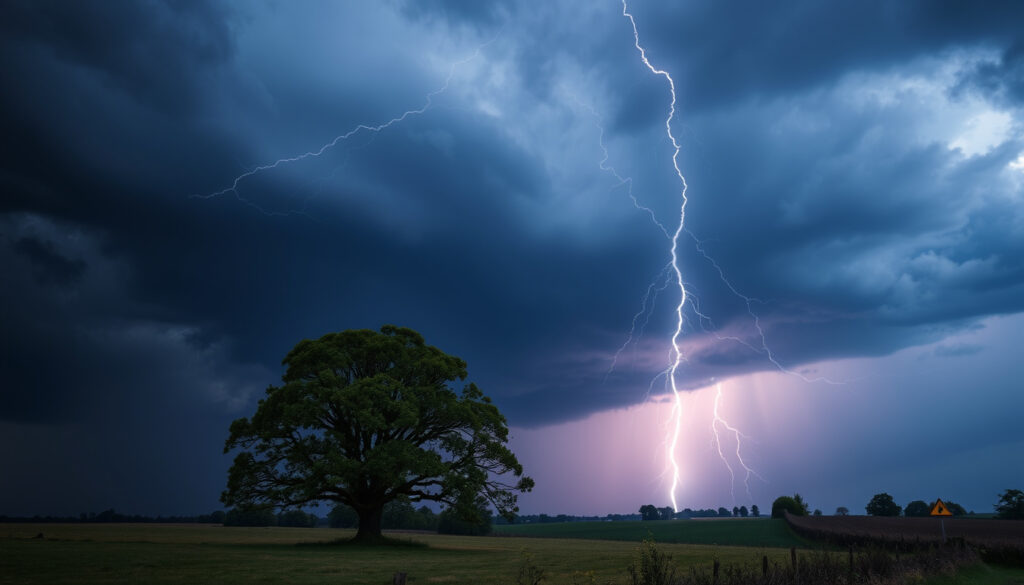
UK Amber Weather Warning Thunderstorms – What You Need to Know
UK Amber Weather Warning for Thunderstorms: What You Need to Know
The Met Office has issued an amber weather warning for thunderstorms across parts of southern England and London for the morning of 19 July 2025. The warning indicates a high likelihood of severe thunderstorms that could cause travel disruption, power cuts, and localised flooding. Here is what the warning means, which areas are affected, how long it will last, and how to stay safe.
Amber warnings are the second-highest level in the UK weather warning system, reserved for events where there is an increased likelihood of impacts that could disrupt daily life. Thunderstorms under an amber warning can bring intense rain, frequent lightning, hail, and gusty winds.
The warning covers a broad area from Hampshire to Kent, including London, and extends as far north as Cambridgeshire. It is in force from 04:00 UTC to 11:00 UTC on 19 July 2025, with peak storm activity expected between 06:00 and 09:00 UTC, coinciding with the morning commute.
What Is an Amber Weather Warning for Thunderstorms?
| Warning Type | Severity | Time Period | Affected Areas |
|---|---|---|---|
| Thunderstorm | Amber (Increased likelihood of disruption) | 19 July 2025, 04:00–11:00 UTC | Hampshire to Kent, London, Cambridgeshire |
Key Insights About This Amber Warning
- Amber warnings are issued when there is a high probability of severe weather causing disruption.
- Thunderstorms under amber can bring lightning, hail, gusty winds, and flash flooding.
- The warning for 19 July 2025 covers London and southeast England during the morning commute.
- Check the Met Office map regularly, as warnings can be updated or extended.
- Affected residents should prepare for possible travel delays and power outages.
- This event is part of a broader pattern of summer thunderstorms in the UK.
Warning Snapshot: Facts at a Glance
| Attribute | Detail |
|---|---|
| Warning Colour | Amber |
| Meaning | Increased likelihood of severe weather – be prepared |
| Current Status | Active (as of 19 July 2025) |
| Start Time | 04:00 UTC |
| End Time | 11:00 UTC |
| Areas | London, South East England (Hampshire to Kent, Cambridgeshire) |
| Issuing Body | Met Office |
| Risk Level | High for disruption from thunderstorms and possible flooding |
Is There a UK Amber Thunderstorm Warning Today?
Yes, the Met Office has an active amber thunderstorm warning in place for 19 July 2025. It covers much of southern England and London during the early morning and mid-morning hours.
Will There Be Thunderstorms Tomorrow?
The warning is for today, 19 July. For conditions beyond this date, the Met Office warnings page shows forecasts up to seven days ahead. New warnings may be issued if thunderstorms persist into the weekend. Check the Met Office UK warnings page for the latest outlook.
Storm to Hit Britain This Weekend
While the current warning covers only Friday morning, the Met Office advises that further warnings could be added if conditions evolve. The Sky News report from 19 July notes that temperatures remain high, which can fuel additional thunderstorms later in the weekend.
What Time Does the Amber Warning Start and End?
The warning begins at 04:00 UTC and ends at 11:00 UTC on 19 July. However, the Met Office may extend or downgrade the warning depending on how the storms develop.
Is the Warning Still Active?
As of the time of publication, the warning is active. Since weather warnings can be updated with short notice, always consult the official Met Office Weather Warnings Guide for real-time status.
The exact location of thunderstorms within the amber zone remains uncertain. Some areas may see less activity, while others could experience intense downpours. Localised flooding can occur even outside the amber zone, so stay aware of local conditions.
Which Areas Are Affected by the Amber Thunderstorm Warning?
Is London Under the Amber Thunderstorm Warning?
Yes, all of London is included in the amber warning zone. The capital is expected to be one of the most affected areas, with potential for surface water flooding and disruption to public transport.
Which Counties Are Included?
The warned area stretches from Hampshire in the south-west, across Surrey, West Sussex, East Sussex, Kent, and up to Cambridgeshire. The BBC Weather Warnings page provides a colour-coded map that helps identify the exact boundaries.
Is the Amber Warning Map Available Online?
The Met Office provides an interactive warning map on its website. Click on the warning triangles to see detailed information for each area, including affected local authorities and the impact matrix. Visit the Met Office warnings map to explore the full detail.
If you live near the boundary of the amber zone, do not assume the warning does not apply to you. Thunderstorms can develop quickly and affect areas just outside the formal warning area. Always monitor local radar and official updates.
How Long Will the Amber Thunderstorm Warning Last?
The warning is scheduled to last from 04:00 UTC to 11:00 UTC on 19 July 2025. Here is the timeline of key events.
- 18 Jul 2025: Met Office issues amber thunderstorm warning for 19 July morning.
- 19 Jul 04:00 UTC: Warning comes into effect.
- 19 Jul ~06:00–09:00 UTC: Peak thunderstorm activity expected in warned area.
- 19 Jul 11:00 UTC: Warning expires (may be extended or new warnings issued).
- Further updates: Via Met Office and national news outlets.
For the most current timeline, the Traffic Scotland weather warnings page explains how amber warnings relate to travel and advises avoiding non-essential journeys during such alerts.
If you are in or near the affected region, familiarise yourself with the Weather in Great Yarmouth – 10-Day Forecast and Official Updates for regional comparisons.
How Certain Is the Amber Warning? What Remains Unclear?
| Established Information | Information That Remains Unclear |
|---|---|
| High confidence in the warning area and timing based on model consensus. | Exact location of thunderstorms within the amber zone is uncertain – some areas may see less activity. |
| The warning is issued by the Met Office, the UK’s national weather service. | Warning may be extended or downgraded depending on storm evolution. |
| Thunderstorms under amber warnings bring a real risk of disruption, including power cuts and flooding. | Localised flooding can occur even outside the amber zone. |
| Intensity of lightning and hail remains uncertain. |
Because of this uncertainty, the Met Office advises staying alert to local conditions and official updates. Do not assume that the warning covers your exact location if you are near the boundary of the amber zone.
What Is the Context for This Thunderstorm Warning?
Summer thunderstorms are common in the UK, but an amber warning indicates a higher-than-usual risk of disruption. The warning area includes London and the South East, which has high population density and transport networks vulnerable to flooding. This event follows a period of warm weather that caused atmospheric instability, creating conditions favourable for severe storms.
The amber warning is part of a tiered system designed to give people time to prepare. According to the Met Office Thunderstorm Safety Advice, such warnings are issued when there is a high probability that severe weather will cause significant impacts. For a Holger Rune injury update, please visit Holger Rune injury update.
While this specific warning is for a short duration (seven hours), similar warnings have been issued multiple times per year in the UK, especially during late spring and summer.
Where Can I Find Reliable Updates and Official Quotes?
The following official sources provide authoritative information. Here are key statements from the Met Office and news organisations.
“Amber warnings indicate an increased likelihood of impacts from severe weather, which could potentially disrupt your plans.”
— Met Office Weather Warnings Guide
“Warnings are issued for rain, thunderstorms, wind, snow, lightning, ice, extreme heat and fog.”
— BBC Weather Warnings
“Today’s amber warning is in place for an area from Hampshire to Kent and up to Cambridge, including all of London, from 4am until 11am.”
For additional real-time information on flood risk, the Environment Agency Flood Warnings service provides local alerts and advice.
What Should You Take Away from This Amber Warning?
The amber thunderstorm warning is a serious alert that requires attention and preparation. The safest course of action is to avoid non-essential travel during the warning period, secure outdoor property, and stay informed through the Met Office and local authorities. For broader context on UK weather alerts, see the article on UK Met Office Heatwave – 2025 Status Alerts and Advice.
Frequently Asked Questions
What is the difference between amber and yellow weather warnings?
Yellow warnings mean that there is a low likelihood of severe weather, but it could still cause disruption. Amber warnings mean there is an increased likelihood of impacts – you should be prepared and take action to stay safe.
Can an amber warning be upgraded to red?
Yes, if conditions worsen significantly and life-threatening weather is expected, the Met Office can upgrade an amber warning to red. Red warnings are rare and indicate highest risk.
How often are amber thunderstorm warnings issued in the UK?
The Met Office issues amber warnings several times a year for different weather types, including thunderstorms, especially during summer and autumn.
Why is the amber warning only for the morning?
Weather models indicated that the most intense thunderstorms would occur during that window. Conditions may change, and warnings can be extended.
Where can I check the amber warning map?
The Met Office provides an interactive warning map at weather.metoffice.gov.uk/warnings.
Will schools be closed due to an amber thunderstorm warning?
School closures are not automatic. Decisions are made locally based on conditions. Check with your child’s school or local authority.
More related posts
 Clip-In Hair Extensions – 2025 Guide to Application and Care
 Ellie Rowsell – Age, Relationship Status and Harry Styles Connection
 Days Out – Best UK Attractions for Families and Couples
 Marty Reisman – Biography, Net Worth, and Cause of Death
 Transit Van – Complete UK Guide: Specs, Payload & Buying Tips
 Tina Malone – Biography, Weight Loss, and Latest News
 Laila Cunningham – Biography, Political Career and Family Life
 Caitlin Clark – Biography, Stats, Height, and WNBA Career