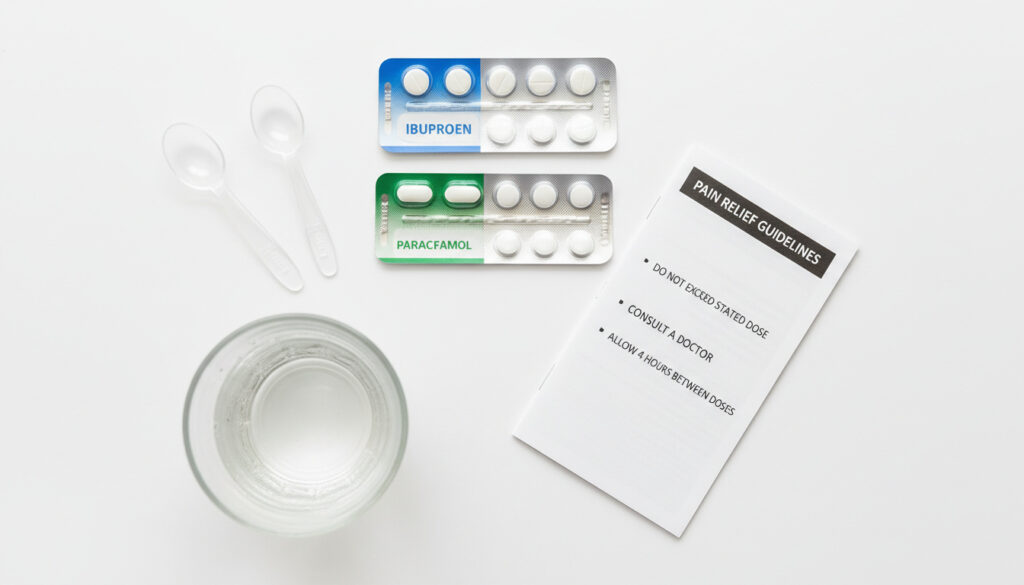
Can You Take Ibuprofen and Paracetamol Together – Safety Dosage and Guidelines
Adults seeking relief from persistent pain or fever often wonder whether combining ibuprofen and paracetamol offers better results than taking either medication alone. Medical guidance confirms that individuals over 16 can generally use both drugs concurrently without dangerous interactions, provided they adhere to recommended dosing limits.
The situation differs significantly for younger patients. NHS and NICE guidelines specifically caution against administering these medications simultaneously to children under 16 unless a doctor provides explicit instructions. Understanding these distinctions prevents the confusion that leads to accidental overdose.
Both drugs combat pain through distinct biological pathways. Ibuprofen functions as a non-steroidal anti-inflammatory drug (NSAID), while paracetamol acts primarily on the central nervous system. This complementary mechanism explains why healthcare providers sometimes recommend alternating doses for stubborn symptoms.
Is it safe to take ibuprofen and paracetamol together?
Generally compatible with no direct pharmacological interaction between compounds.
Paracetamol 4g; Ibuprofen 1.2g (over-the-counter limits).
Alternate every 4-6 hours for continuous coverage without overlap.
Pregnant, liver/kidney disease, history of stomach ulcers, or taking anticoagulants.
- No harmful chemical interaction exists; the drugs utilize different metabolic pathways.
- Ibuprofen inhibits COX-1 and COX-2 enzymes to reduce peripheral inflammation.
- Paracetamol centrally blocks prostaglandin synthesis within the hypothalamus.
- Clinical evidence supports superior analgesia for acute post-operative pain when combined appropriately.
- Alcohol consumption significantly increases hepatotoxicity risk with paracetamol use.
- Gastrointestinal protection requires taking ibuprofen with food.
- Underlying cardiovascular or renal conditions alter the safety profile substantially.
| Characteristic | Ibuprofen | Paracetamol |
|---|---|---|
| Drug Class | NSAID | Analgesic/Antipyretic |
| Primary Use | Pain, inflammation, fever | Pain, fever (minimal anti-inflammatory effect) |
| Mechanism | COX enzyme inhibition | Central prostaglandin regulation |
| Adult Maximum | 1200mg daily (OTC) | 4000mg daily |
| Dosing Interval | Every 6-8 hours | Every 4-6 hours |
| Food Requirement | Yes (with food/milk) | No (empty stomach acceptable) |
| Primary Overdose Risk | GI bleeding, renal failure | Hepatic necrosis, liver failure |
What is the recommended dosage when taking ibuprofen and paracetamol together?
How long should you wait between taking paracetamol and ibuprofen?
Adults may consume both medications simultaneously without waiting periods, as no direct interaction occurs. However, alternating doses every three to four hours provides more consistent pain coverage throughout the day. This staggered approach maintains therapeutic levels while reducing the risk of toxicity from either compound.
Is it safe to take ibuprofen and paracetamol every 4 hours?
Strict adherence to individual drug limits prevents dangerous accumulation. Paracetamol permits maximum four doses within 24 hours, spaced four to six hours apart. Ibuprofen allows maximum three doses daily, requiring six to eight hours between administrations. Attempting to take ibuprofen every four hours would exceed safe thresholds.
When alternating doses, record each administration time and amount directly on the medicine packaging or a dedicated chart. Multiple caregivers often lose track of timing, creating particular overdose risks with paracetamol’s narrow therapeutic window.
Can children take ibuprofen and paracetamol together?
Why simultaneous use is discouraged for children under 16
NHS guidance explicitly states that paracetamol and ibuprofen should not be given simultaneously to children unless specifically instructed by a healthcare professional. NICE guideline NG143 (2019) reinforces this for under-fives with fever, citing the increased risk of dosage errors and adverse events when parents administer both drugs concurrently.
How to safely alternate Calpol and Nurofen
Alternating becomes permissible when distress persists before the next dose of the initial medication becomes due. For example, administer paracetamol (Calpol) initially; if the child remains uncomfortable after three to four hours, ibuprofen (Nurofen) may be given. Strict record-keeping prevents accidental overdose when multiple carers administer medicines.
Paracetamol allows maximum four doses within 24 hours, spaced 4-6 hours apart. Ibuprofen permits maximum three doses daily, spaced 6-8 hours apart. Exceeding these limits risks fatal liver damage or renal failure, particularly in underweight children who may exceed mg/kg limits despite following volume instructions.
What are the risks and side effects of ibuprofen and paracetamol?
What happens if you overdose on ibuprofen and paracetamol?
Paracetamol overdose presents initially with minimal symptoms but causes irreversible hepatic necrosis within days. Ibuprofen toxicity leads to gastrointestinal bleeding, renal impairment, and asthma exacerbation. Underweight children face heightened risks of exceeding safe mg/kg thresholds despite following standard volume measurements.
Who should avoid this combination?
Contraindications require particular attention. Avoid ibuprofen entirely during chickenpox due to risks of severe skin reactions. Pregnant women must avoid ibuprofen after 28 weeks because of fetal heart and kidney complications. Individuals with inflammatory bowel disease, bleeding disorders, or severe asthma should consult specialists before use. Those monitoring medication side effects should note that both drugs present similar fever-reducing profiles but differ in gastric and hepatic risks.
Always administer ibuprofen with food or milk to protect gastric mucosa. This precaution becomes essential when using the drug repeatedly for chronic conditions or when combining with other NSAID-containing products.
How should you time alternating doses of ibuprofen and paracetamol?
- 08:00 – Administer initial paracetamol dose (4-6 hour window begins). Source: MadeForMums
- 11:00 – If distress persists, administer ibuprofen (6-8 hour window begins). Source: Royal United Hospitals Bath
- 14:00 – Second paracetamol dose due (maximum 4 doses/24hrs). Source: HSE Ireland
- 17:00 – Second ibuprofen dose permitted if needed (maximum 3 doses/24hrs).
- 20:00 – Third paracetamol dose window opens.
- 23:00 – Final paracetamol dose permitted if four-dose maximum not yet reached.
What do we know for certain about combining these medications?
| Established Facts | Uncertain or Context-Dependent Factors |
|---|---|
| Adults without contraindications may safely combine both drugs. | Long-term safety data for daily combination use beyond 48-72 hours. |
| No direct pharmacokinetic interaction occurs between the compounds. | Individual metabolic variations affecting toxicity thresholds. |
| Superior pain relief documented for dental and orthopaedic procedures. | Precise risk thresholds for underweight or premature infants. |
| Children under 16 require strict alternating protocols, never simultaneous dosing. | Impact on severe viral infections beyond documented chickenpox reactions. |
| Breastfeeding mothers may use both at standard doses safely. Source: Breastfeeding Network | Specific interactions with novel anticoagulant therapies. |
How do ibuprofen and paracetamol differ in mechanism?
These analgesics operate through fundamentally distinct biological pathways. Ibuprofen belongs to the NSAID class, working peripherally to inhibit cyclooxygenase (COX) enzymes. This blockade reduces prostaglandin production throughout the body, diminishing inflammation, swelling, and pain at the source.
Paracetamol (acetaminophen) lacks significant peripheral anti-inflammatory activity. Instead, it exerts effects centrally within the hypothalamus, regulating temperature and pain perception through distinct mechanisms involving endocannabinoid and serotonergic pathways. This non-COX mechanism explains why the drugs complement rather than compete with each other, allowing combination use without metabolic pathway conflicts.
The divergence explains their differing side effect profiles. Ibuprofen’s peripheral COX inhibition causes gastric irritation and renal effects, while paracetamol’s hepatic metabolism creates liver toxicity risks at high doses.
What do medical authorities say about combining these painkillers?
For children, paracetamol is safe to give with ibuprofen, but do not give them at the same time. Give one medicine at a time, unless a doctor specifically advises otherwise. If your child remains distressed before the next dose of the first medicine is due, you can give the other medicine.
NHS Guidelines on Paediatric Pain Relief
No harmful interaction exists between paracetamol and ibuprofen. They work differently and can be taken together at recommended doses in adults without contraindications such as stomach ulcers, kidney or liver problems.
Patient.info Drug Interaction Analysis
Should you take ibuprofen and paracetamol together?
Adults experiencing moderate to severe pain may safely combine these medications for short-term relief, provided they adhere to individual maximum daily doses and respect the specific timing intervals for each drug. Children require stricter protocols involving alternating administration only, with meticulous record-keeping to prevent overdose. When uncertainty exists regarding safe ibuprofen dosage limits or individual contraindications, consultation with a pharmacist or general practitioner remains essential before commencing combination therapy.
Frequently Asked Questions
Can you take ibuprofen and paracetamol on an empty stomach?
Paracetamol may be taken without food. Ibuprofen should always accompany meals or milk to prevent stomach irritation and potential ulceration.
Is it safe to drink alcohol while taking ibuprofen and paracetamol?
Alcohol increases liver toxicity risk with paracetamol and bleeding risk with ibuprofen. Complete avoidance is recommended during treatment periods.
Can you drive after taking ibuprofen and paracetamol together?
Neither medication typically impairs driving ability. However, if experiencing dizziness, drowsiness, or blurred vision, avoid operating vehicles or machinery.
Do ibuprofen and paracetamol affect hormonal contraception?
These analgesics do not reduce the effectiveness of contraceptive pills. Limited evidence suggests ibuprofen may theoretically affect intrauterine device efficacy.
Can you take ibuprofen and paracetamol if you have high blood pressure?
Ibuprofen can elevate blood pressure and reduce antihypertensive medication effectiveness. Paracetamol presents fewer cardiovascular risks for hypertensive patients.
How quickly do they work when taken together?
Paracetamol acts within 30-60 minutes; ibuprofen begins working within 20-30 minutes. Simultaneous administration does not delay onset of either drug.
More related posts
 John Major – Complete Biography and Political Legacy
 Noddy Holder – Biography, net worth and health update 2025
 Ethel Cain – Complete Guide to Artist, Music, and 2025 Tour
 Steven Graham – Biography, Wife, Movies & TV Shows 2025
 Clair Buckley – Biography, Husband James Buckley and Her Instagram
 Zero-Emissions Vehicle – Definition Examples Benefits 2025
 Harry Maguire 2025 – Age, Salary, Wife & Transfer News